

Chevron Signs 20-Year Deal to Build Microsoft a Private, 2.67 GW Power Plant
On June 22, Chevron subsidiary Energy Forge One signed a 20-year power purchase agreement with Microsoft to build a co-located gas power plant in West Texas dedicated entirely to a Microsoft data center. The project, called Project Kilby, will deliver roughly 2.67 gigawatts of capacity in phases, using gas turbines from GE Vernova and Caterpillar. The power will never touch the public grid. First delivery is expected in 2028, as Microsoft plans $190 billion in capital spending for 2026, a 61% jump from 2025.
A fossil fuel major just decided selling electricity beats selling oil. When Chevron sees better returns building a power plant for one customer than pumping crude, the market has already moved.
Watch whether other oil majors copy Chevron’s model instead of just selling gas to utilities.
(Chevron)
Texas Approves Batch Zero Process for a 438 GW Data Center Queue
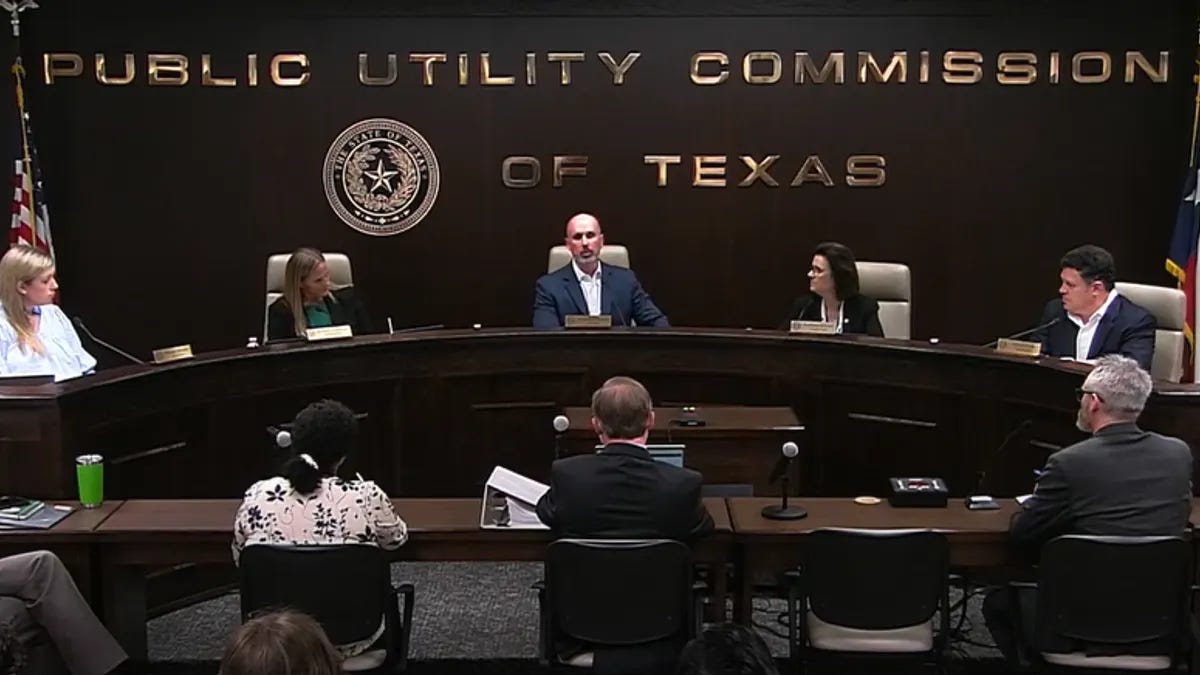
On June 18, the Public Utility Commission of Texas approved rules for ERCOT to process large-load interconnection requests, the applications developers file to connect new demand to the grid, in batches instead of one at a time. The queue has swelled past 438 GW, with nearly 90% of it from data centers. ERCOT’s all-time peak demand record is 85,508 MW, so the queue is more than five times the grid’s actual capacity. Historically, only about 49% of claimed data center load ever materializes, so grid planners are building rules for demand that may never show up.
DOE Offers $17.5 Billion in Loans to Rebuild the Nuclear Supply Chain
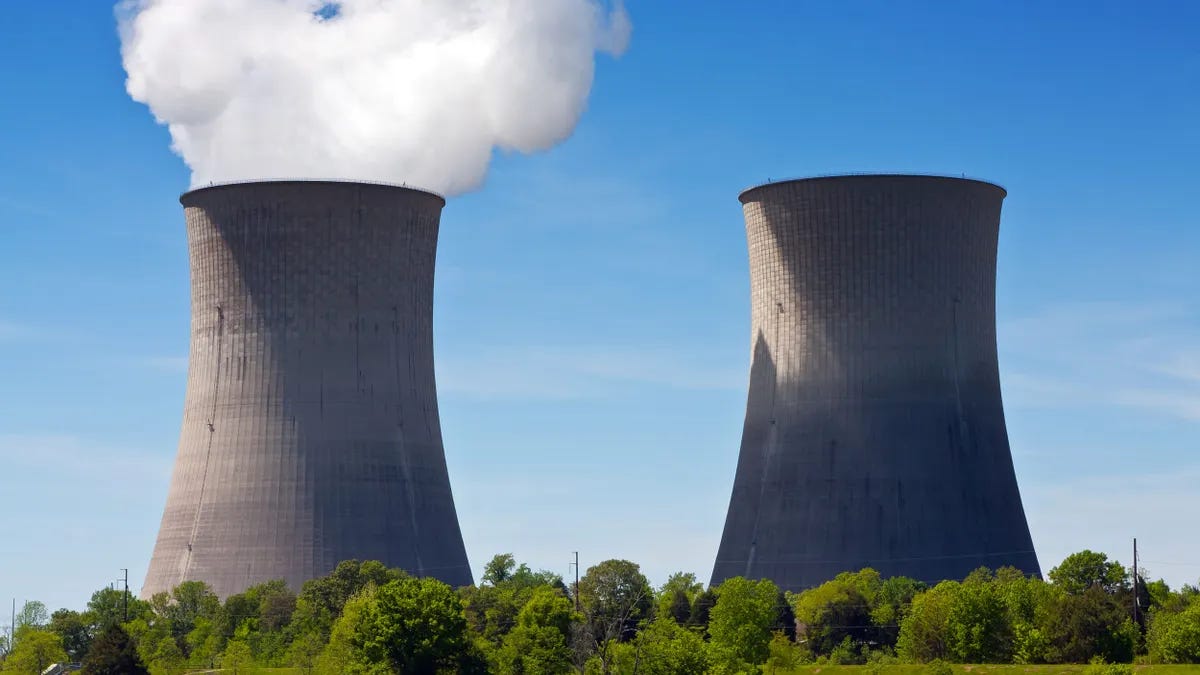
On June 23, the Department of Energy’s Office of Energy Dominance Financing issued a conditional loan commitment of $17.5 billion to finance long-lead items, the specialized components like reactor vessels that take years to manufacture and usually cause construction delays, for five utility-led projects. The goal is 10 new large reactors, mostly Westinghouse AP1000 units. The loan implements Executive Order 14302’s target of 300 GW of new nuclear by 2050, but $17.5 billion covers only about 9% of the roughly $200 billion total cost for ten AP1000s. Watch whether utilities actually sign construction contracts once the full price tags land.
FERC Orders Six Grid Operators to Justify or Rewrite Large-Load Rules
On June 18, FERC issued show-cause orders to the six largest U.S. grid operators, PJM, MISO, Southwest Power Pool, CAISO, ISO New England, and NYISO, directing each to justify its existing rules for connecting gigawatt-scale power users or propose reforms within 60 days. FERC went region by region instead of writing one national rule, a move built to survive legal challenges from individual states. The orders lean hard on cost transparency: who pays for the transmission upgrades a new data center requires. The rules due back by August will decide which data center projects actually get built, and where.
Supreme Court Strips Removal Protections From FERC Commissioners
On June 29, the Supreme Court ruled 6-3 in Trump v. Slaughter that a president can remove heads of independent agencies without cause, overturning the 90-year-old Humphrey’s Executor precedent. FERC’s five commissioners set the rules for the interstate power grid, transmission costs, and increasingly how data centers connect to it. Legal experts say there is now no doctrine stopping a president from firing a commissioner over a decision he dislikes, ending decades of independence regulators used to referee fights between utilities, generators, and data center developers. Watch whether this administration tests that power on FERC directly, given the agency is mid-fight over the same large-load rules above.
(E&E News)
Vattenfall Starts Construction on Germany’s Largest Offshore Wind Project
On July 1, Vattenfall installed the first monopile, the steel foundation that anchors a turbine to the seabed, for Nordlicht I in the German North Sea. Combined with the planned Nordlicht II, the cluster will reach 1.6 GW and produce about 6 terawatt-hours a year, roughly enough for close to two million German households. Both phases are due online by 2028. Europe is still building offshore wind at scale even as the U.S. cancels leases outright, below.

Rolls-Royce SMR Wins Sweden’s First New Nuclear Contract in 40 Years
On June 15, Swedish utility Videberg Kraft selected Rolls-Royce SMR to build three small modular reactors, compact nuclear plants built from factory-made sections instead of poured on site, at the Värö Peninsula next to the existing Ringhals plant. Each reactor produces 470 MW, for roughly 1,410 MW combined and about 12 terawatt-hours a year. It is Sweden’s first new nuclear build in over 40 years, with first power expected in the mid-2030s.
DOE Orders Colorado Coal Plant to Keep Running for a Third Time
On June 26, Energy Secretary Chris Wright issued a third emergency order forcing five utilities to keep the 427 MW Craig Unit 1 coal plant in Colorado running through September 26, six months past its original retirement date. It is a small plant, but three straight emergency extensions show how tight grid margins have gotten across the Southwest Power Pool region as demand climbs. Watch whether a fourth extension follows in September, or whether replacement capacity finally shows up.
(American Public Power Association)
Have fun this week,
Will
Sources
Chevron Signs 20-Year Power Agreement with Microsoft for West Texas Data Center | Chevron
Texas, facing 438 GW queue, approves initial large-load interconnection process | Utility Dive
DOE offers $17.5B in loans to help build 10 large nuclear reactors | Utility Dive
FERC Targets Grid Rules for Data Centers, Large Loads | Data Center Knowledge
Vattenfall Starts Offshore Construction of Germany’s Largest Offshore Wind Project | Vattenfall