

For most of its history, the electric distribution grid operated without much self-awareness. Utilities could see what was happening inside their substations, but between the substation and the customer, the picture went dark. Equipment either worked or it did not, and the first indication of a problem was usually a phone call from someone whose lights had gone out.
Utilities are getting more visibility into their grids than they ever have, thanks to the embedded compute that manufacturers have been building into field equipment for the past decade and the power management hardware that keeps those devices alive in some of the harshest operating environments in electronics.
What Is Actually on the Pole Now
A distribution recloser is a switching device that can interrupt fault current and automatically attempt to restore power after a momentary fault, the kind caused by a tree branch briefly touching a line. Reclosers have existed for decades. What is different now is what is running inside them.
A modern recloser contains a microcontroller unit (MCU), essentially a small self-contained computer, running protection logic that used to require a separate relay cabinet. That MCU monitors current and voltage waveforms in real time, makes trip and reclose decisions in milliseconds, logs fault data with timestamps, and reports device status back to the utility control room over cellular or RF mesh networks. It can also execute FLISR logic, which stands for Fault Location, Isolation, and Service Restoration: a sequence of switching actions that isolates a faulted segment and reroutes power to unaffected customers using alternate feed paths (QEI Automation Solutions).
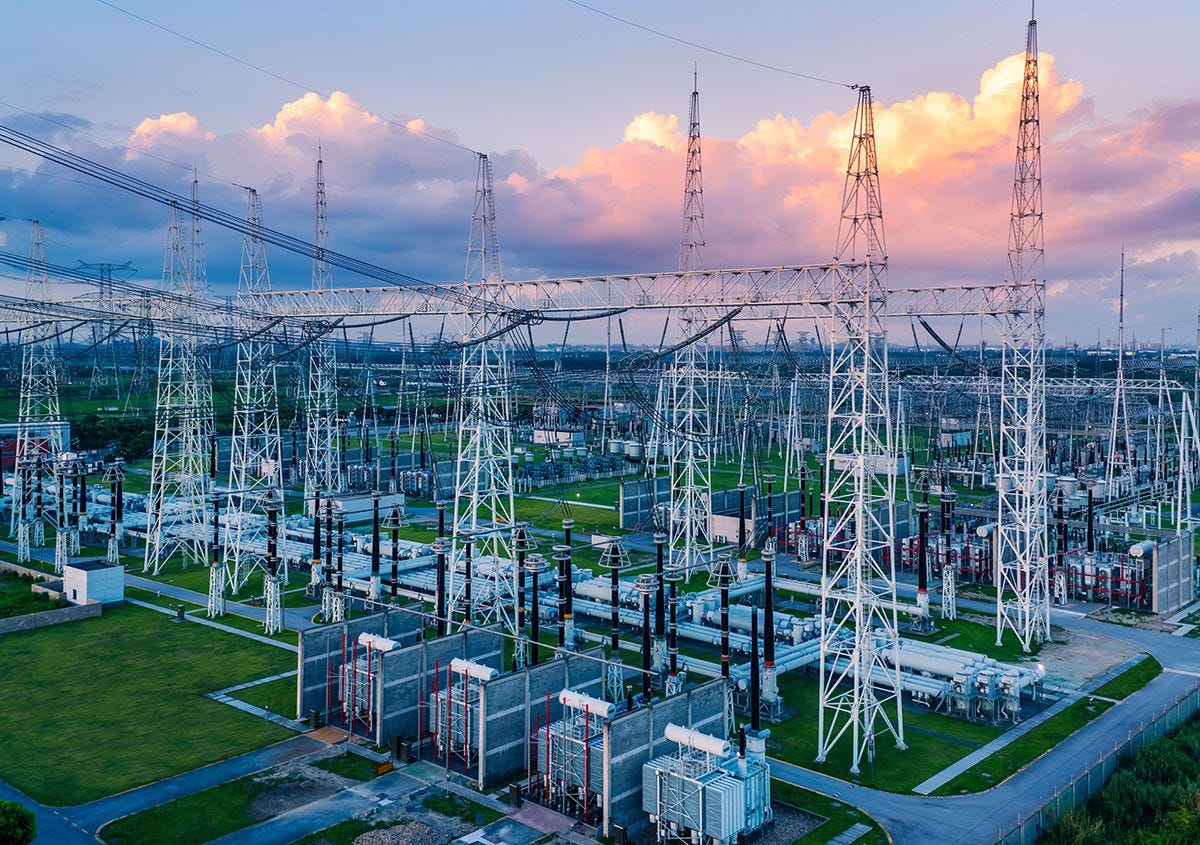
S&C Electric’s reclosures are one of the better-known implementations of this approach. Their devices use what S&C calls PulseClosing Technology, which sends a brief test pulse to check for a cleared fault rather than immediately re-energizing the full line. (Renewable Energy World). The same intelligence is now built into capacitor bank controllers, sectionalizing switches, and line sensors. Schweitzer Engineering Laboratories (SEL), whose protection relays are installed throughout North American substations, builds relays around high-speed signal processing architectures with sampling rates fast enough to detect transients that would be invisible to traditional SCADA polling, which typically updates on a one-to-four-second cycle.
On the metering side, Itron’s Outage Detection System processes what the industry calls “last gasp” signals: when a meter loses power for more than 30 seconds, it draws on an internal supercapacitor to transmit a final message to the utility’s head-end system with a timestamp and location. The utility’s outage management system receives that georeferenced event and begins mapping the outage boundary before any crew has been dispatched (CLOU Global).
Sending Reliable Signals, No Matter What
Putting an MCU on a distribution pole introduces a new design constraint, the device has to stay operational when the grid it is monitoring goes down.
A grid monitoring device that goes dark during an outage is useless. Solving that requires careful power management, which is where PMICs (Power Management Integrated Circuits) become critical. A PMIC is the chip responsible for regulating voltage, managing battery charging and discharge, and sequencing power rails across the device.
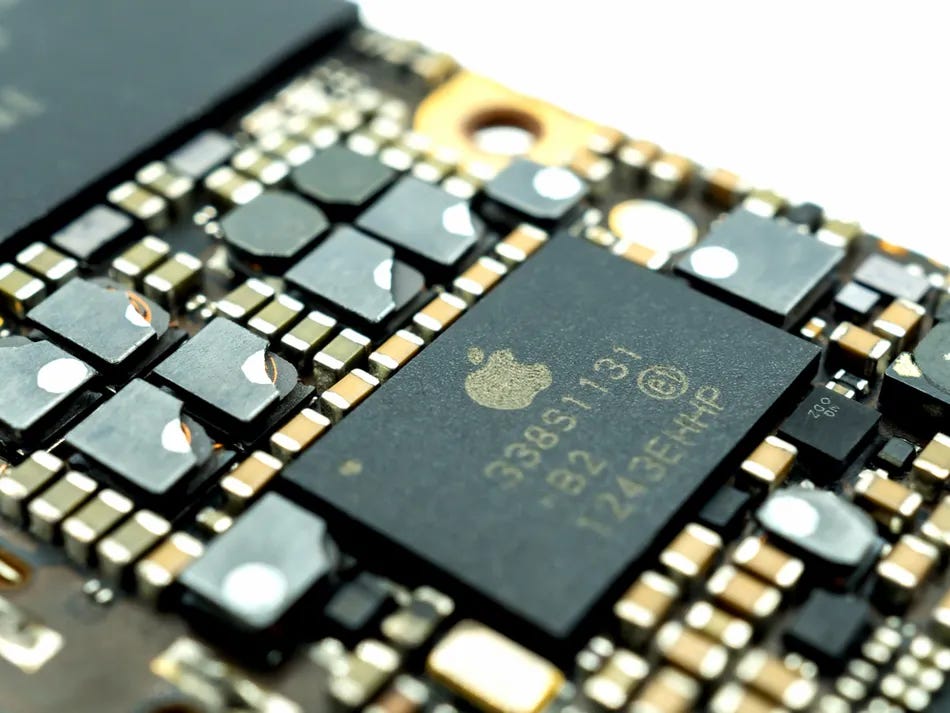
The PMIC in a field device also has to meet requirements that rule out most consumer-grade parts. Operating temperature range is typically -40°C to +85°C, with some industrial-rated parts extending to -55°C. The device has to tolerate significant electromagnetic interference from nearby conductors. And quiescent current draw during low-power monitoring intervals matters enormously, because a device expected to operate for 15 to 20 years with minimal maintenance cannot afford to drain its backup battery between reporting cycles.
From Sensor Data to a Live Map
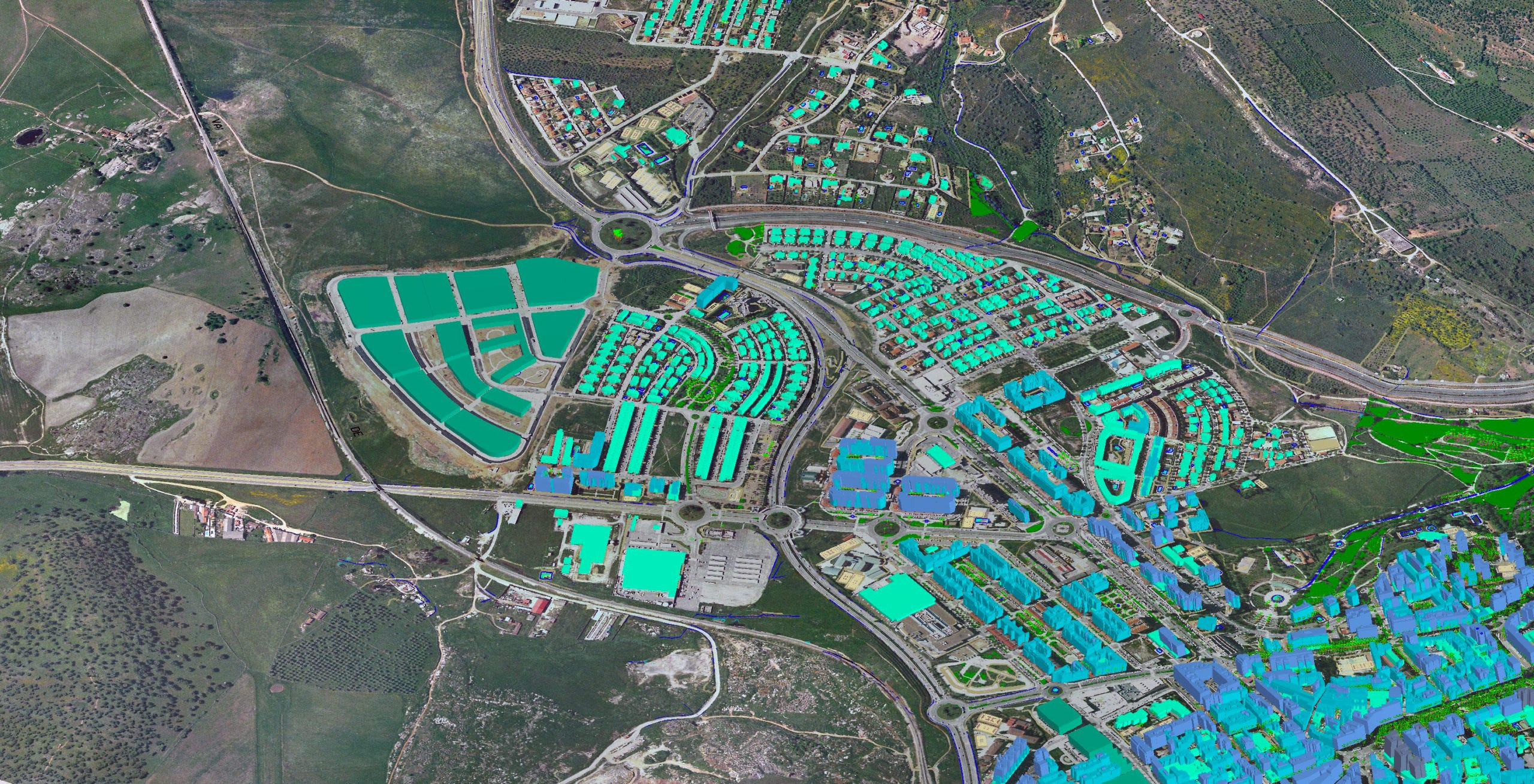
When enough reclosers, line sensors, and smart meters are deployed across a distribution circuit, their combined telemetry gives the utility a real-time topological view: which segments are energized, which are isolated, where load is flowing, and where anomalies are appearing. That data feeds a DMS (Distribution Management System), which in turn populates a live GIS (Geographic Information System) map showing current grid state.
Before this layer existed, a utility dispatching crews after an outage was often working from a paper map and customer call patterns, trying to infer where the fault was from indirect evidence. With enough field device telemetry, the DMS can often pinpoint the faulted segment before a dispatcher has finished reading the initial alarm. Studies on distribution automation deployments show FLISR can reduce the number of customers experiencing extended outages by up to 50% during fault events by rapidly restoring unaffected sections while crews address the faulted segment (Alliance for Competitive Power).
These devices are already making an impact on our grid. Pacific Gas & Electric piloted what it calls Enhanced Powerline Safety Settings (EPSS) on 170 circuits in high fire-threat areas in 2021, adjusting protection devices including reclosers to cut power within one-tenth of a second when a fault is detected. The pilot showed an 80 percent reduction in CPUC-reportable ignitions in High Fire Threat Districts compared to the prior three-year average. Based on those results, PG&E expanded the program to more than 1,000 circuits across 25,000 distribution line miles, with 2022 results showing an 82 percent reduction in reportable ignitions on EPSS-enabled lines against the same baseline (PG&E Corporation).
Predictive Maintenance: Catching Failures Before They Happen
Distribution transformers are the most common point of failure on the distribution system, and utility transformer inventories have been under supply pressure for several years due to manufacturing constraints and surging demand from data center buildouts and electrification. Traditional maintenance practice is time-based or reactive: transformers get inspected on a schedule or after they fail. Neither approach is efficient.
Embedded sensors monitoring dissolved gas levels, load current, and thermal signatures change that. Dissolved gas analysis (DGA) is the established diagnostic standard: specific gases released inside a transformer’s mineral oil indicate specific failure modes developing in the insulation. Historically, DGA required pulling an oil sample and sending it to a lab. Continuous online DGA monitoring now puts a sensor directly on the transformer, with an MCU processing readings and flagging units showing early signs of degradation (Megger).
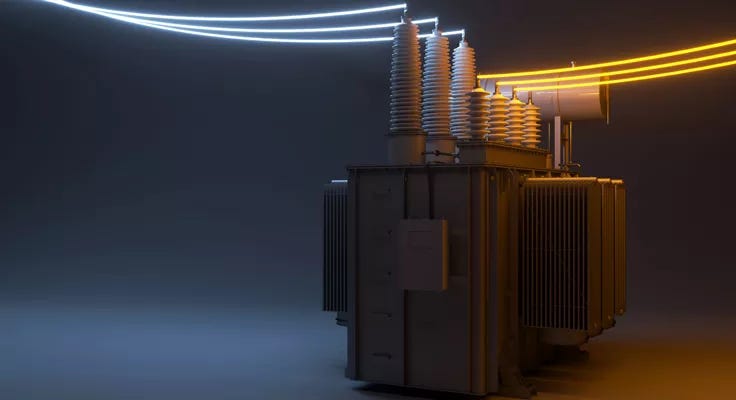
Utilities are integrating this sensor data with machine learning models to rank transformers by failure probability and prioritize replacement schedules. The transition from time-based to condition-based maintenance is now underway across a growing number of utility fleets, with online monitoring enabling utilities to evaluate asset health continuously rather than during periodic inspections (Renewable Energy World).
The goal is to catch equipment problems during normal maintenance windows rather than during storm response, when crews are already stretched and replacement hardware is harder to install.
Where the Gaps Still Are
Most utilities have automated a portion of their distribution network, but coverage is uneven. Urban and suburban feeders tend to have more investment in automation. Rural lines, which typically serve fewer customers per mile and carry higher restoration costs due to travel time, still operate largely on manual switching in many service territories.
The economics are improving. Cellular module costs have dropped significantly over the past five years. MCUs with the processing power needed for local FLISR logic and edge analytics have become cheaper and more power-efficient. The business case for deploying sensors further out on the feeder, past the first automated switch downstream of the substation, is stronger than it has ever been.
The chips enabling all of this are industrial-grade MCUs and PMICs designed for two-decade service lives in outdoor enclosures, running protection logic and power management routines that most engineers will never see. But they are the reason a utility control room can look at a live map and know the state of a switch three feeders away, and increasingly, why that switch can make the right decision on its own before any human picks up the phone.
Have fun this week,
Will
Sources
Reducing the Duration and Impact of Outages with FLISR | QEI Automation Solutions
Distribution Automation Explained: Sensors Cut Outage Time | Alliance for Competitive Power
What Is Dissolved Gas Analysis (DGA) in Transformer Oil? | Megger
TXpert Ready Multi-Gas DGA Analyzer CoreSense M10 | Hitachi Energy