

Data centers are a necessary piece of our digital lives, powering cloud storage, AI models, social media, and streaming services. But when they move into your neck of the woods, they don’t do it quietly. Residents of some communities have started to come forward about the significant health impacts caused by data centers that they have started to experience. This week’s newsletter will look at those impacts and discuss what developers and municipalities can do to make sure their computing power isn’t harming our communities.
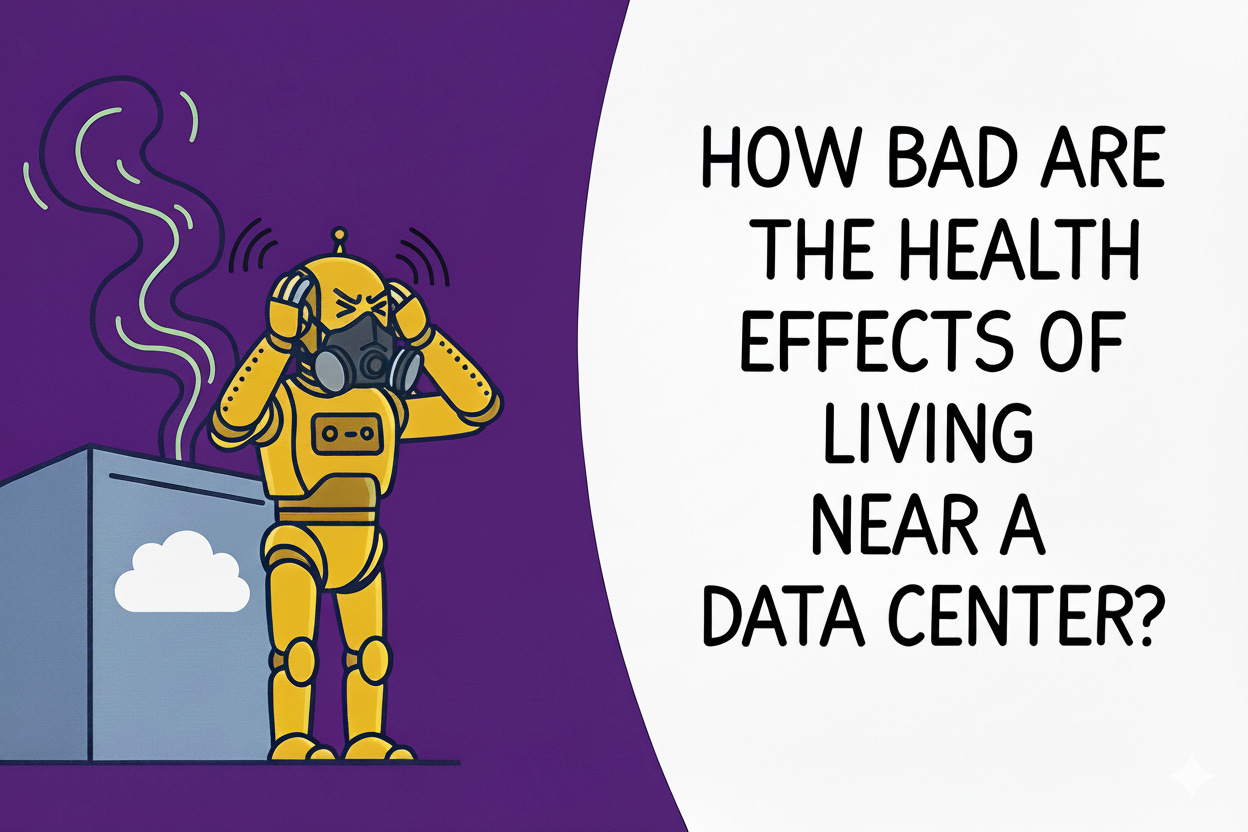
Where has this been reported, and what side effects are they reporting?
The most well-documented case comes from Granbury, Texas. After a large bitcoin mining facility opened, residents began reporting health issues.
Neighbors have complained of severe migraines, vertigo, nausea, panic attacks, and permanent hearing loss. The constant, low-frequency roar of cooling fans has been described as a “dull, inescapable hum” that rattles windows and disturbs sleep. Some said they could even feel vibrations in their walls at night. Noise measurements in the area clocked the sound in at 90–100+ decibels (FOX4 News), much higher than acceptable residential exposure levels. In 2024, a group of residents sued, claiming the facility had caused “irreversible hearing damage, tinnitus, and debilitating vertigo” (Earthjustice). The lawsuit is still ongoing.
The effects mentioned thus far are only the noise-related issues. The list of potential health effects grows if you take into account data centers that are being powered or backed up by natural gas or diesel generators, which can give people respiratory disease and cardiovascular disease caused by their emissions (EPA).
Granbury isn’t the only case. Communities near similar crypto/data center hybrids in Kentucky, New York, and North Carolina (TechPolicy Press) have reported chronic sleep disturbances, stress, and reduced quality of life due to 24/7 noise and vibration.
What can be done to prevent this?
One solution is for municipalities, local air boards, and state or federal regulatory bodies to step in and set maximum decibel levels and make sure that they are enforced. Restricting generator hours/emissions and requiring data centers to prepare health impact assessments before they start construction would also help reduce health risks without relying on developers to take the initiative and do it themselves.
Developers have access to modern technology that can solve all of these problems today, so improving facility design is the most obvious solution that they could begin right now. They can put noisy equipment underground and use acoustic barriers to drastically reduce low-frequency noise and vibration (Future Bridge Americas). They can also use solar and battery storage as the primary source of power generation and only use fossil fuels in emergencies when renewables aren’t producing enough power.
Both of these solutions would drastically increase data center construction costs. Soundproofing a data center is not cheap, and a huge amount of standard 4-hour lithium-ion batteries would be required to keep it powered 24/7, bringing powerplant construction costs way higher than gas turbines. But there is no arguing that those two solutions would improve the quality of life for communities near data centers. If developers want to cut costs by willingly ignoring the health effects that their data centers cause, they should be required to select sites that are far away from any residential areas.
Sources
Granbury Residents Sue Local Bitcoin Mine Over Health-Threatening Noise Pollution - Earthjustice
Residents near Granbury file lawsuit against Bitcoin mining company | FOX 4 Dallas-Fort Worth
Data Center Boom Risks Health of Already Vulnerable Communities | TechPolicy.Press
Noise Control in Data Centers: Key Design Strategies - Future Bridge Americas