

Coal’s share of U.S. electricity has fallen to historic lows. Wind and solar together surpassed coal for the first time in history. Nearly half of the coal capacity that existed in 2010 has already been shut down.
And yet, the federal government has repeatedly used emergency authority to keep aging fossil plants running. There have been 43 total Section 202(c) orders and extensions and 22 plant-retirement deferral orders covering eight plants. Those orders have already added an estimated $300 million in extra ratepayer costs through mid-May 2026, with monthly costs still rising (IEEFA).
Today we’ll dive in to whether we can manage without coal today, and which communities get hurt if we ditch it.
What Would the Grid Look Like Without Coal Tomorrow?
Not good, for certain regions.
The North American Electric Reliability Corporation, which monitors grid reliability across the U.S. and Canada, projects capacity shortfalls across most of its assessment areas over the next decade, with summer peak demand growth expected to significantly outpace new generation coming online (NERC).
PJM is the clearest example. PJM is the grid operator covering 13 states from New Jersey to Illinois plus D.C., managing electricity for about 67 million people. In December 2025, PJM ran its 2027/2028 capacity auction and came up 6,623 MW short of its reliability target, described in trade coverage as the first time PJM failed to meet its reserve-margin target. FERC Commissioner Judy Chang said publicly: “We’re hitting the grid reliability crisis that has been brewing for years” (Utility Dive).
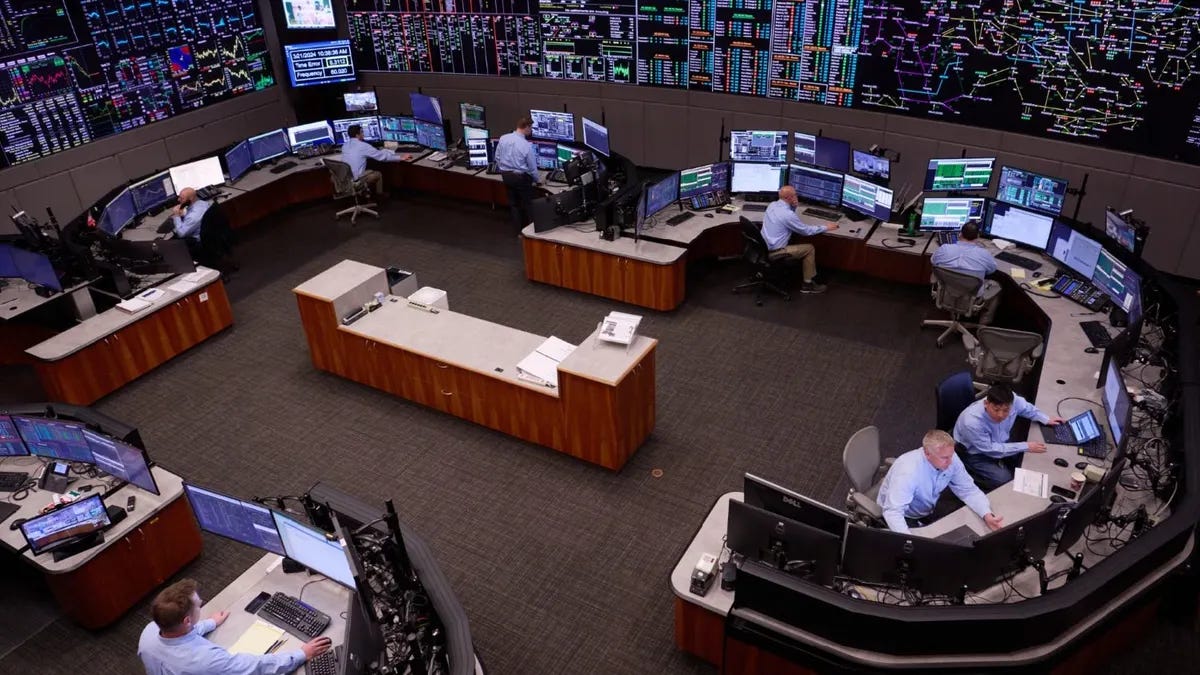
The auction also showed where replacement capacity stands. Data center-driven demand added a 5,250 MW increase to PJM’s forecast, while the auction drew in only 774 MW of new generation. The gap between what is being demanded and what is being built is the core of the reliability problem (Utility Dive).
That does not mean coal needs to stay forever. It means the replacement pipeline has to be moving faster than it currently is.
Which States Are Most Exposed?
The risk is not distributed evenly. A handful of states still depend on coal for most of their electricity and have little replacement capacity waiting to come online.
West Virginia, Kentucky, Missouri, Wyoming, and Indiana generate the largest shares of their electricity from coal, in some cases well above half their total generation. Per EIA 2024 state profiles, West Virginia ran roughly 85% coal and Indiana fell from 85% in 2014 to about 42% in 2024. Many of these states have fewer near-term replacement options than gas- and renewables-heavy regions (EIA).
Indiana is the sharpest near-term case. Two of its plants are currently under federal emergency orders requiring them to stay open. Pennsylvania has more coal plants than any other state by count, with 14 operational facilities as of 2025 according to Statista, and anchors much of the PJM capacity that grid operators are watching most closely.
California has almost fully exited coal in its power mix, with coal at roughly 2% of generation including imports in 2024. Texas has reduced coal sharply but was still around the mid-teens at about 15% in 2024. The coal-heavy states in Appalachia and the Midwest face a much steeper near-term replacement challenge.
Which Plants Is Washington Keeping Alive by Force?
The mechanism is Section 202(c) of the Federal Power Act, a wartime-era authority that lets the Department of Energy order power plants to keep running during grid emergencies. Historically, DOE used the authority sparingly. Since May 2025, use has accelerated sharply, with POWER’s running log counting 43 orders and extensions as of April 2026 and more added since (Power Magazine).
Centralia Unit 2 in Washington state, approximately 730 MW, operated by TransAlta. Washington’s last coal plant, scheduled to close under a 2011 state law. The DOE ordered it to keep running in December 2025 and has extended the order. It is also the largest source of mercury and greenhouse gas emissions in the state (Earthjustice).
J.H. Campbell in Michigan, operated by Consumers Energy. IEEFA and EIA put the affected facility at 1,331 MW. The most recent DOE order was issued May 18, 2026, running through August 16, 2026.
Eddystone Units 3 and 4 in Pennsylvania, 760 MW, operated by Constellation Energy. These are oil and gas units, not coal, but are part of the broader Section 202(c) fight. DOE’s May 21, 2026 order runs May 25 through August 22, 2026.
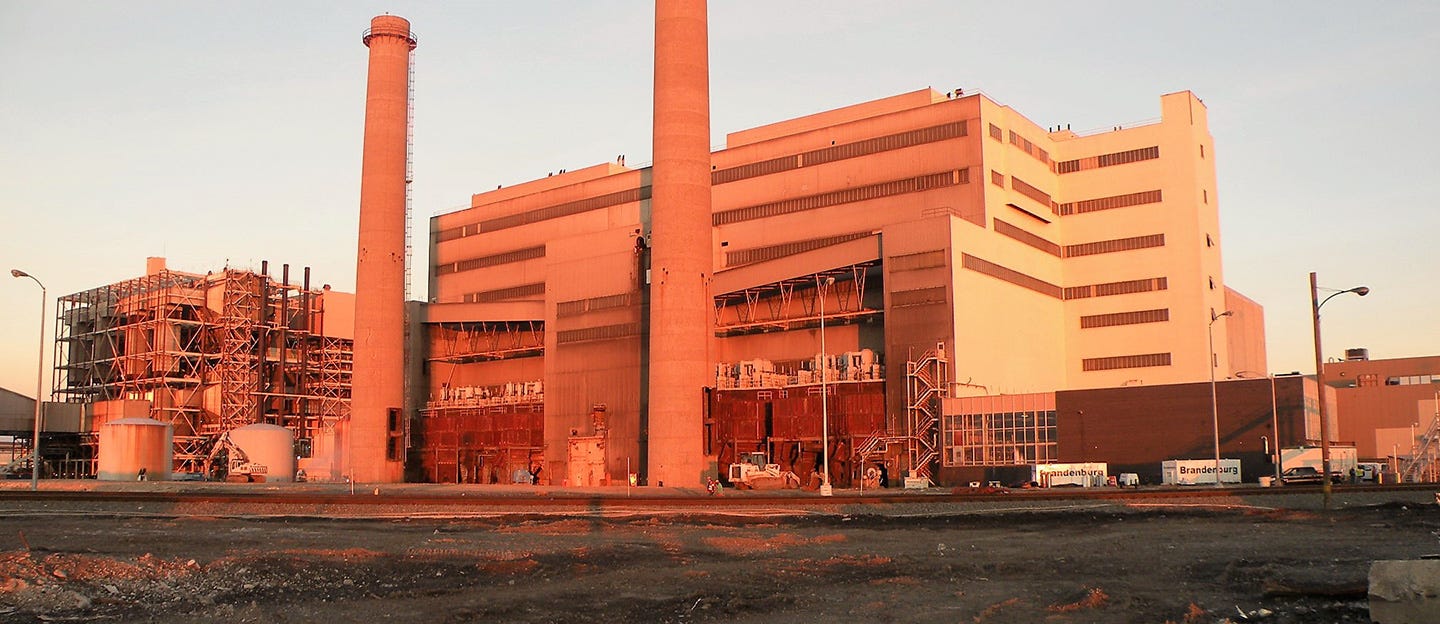
(Constellation)
R.M. Schahfer Units 17 and 18 in Indiana, operated by NIPSCO, with affected capacity reported as roughly 700 to 850 MW depending on whether you use EIA’s affected-unit figure or POWER’s. Under order through mid-June 2026. Continuing to operate would require more than a billion dollars in expenditures according to the groups challenging the order.
F.B. Culley Unit 2 in Indiana, operated by CenterPoint Energy. Under DOE order through June 21, 2026. The plant costs $615,000 per day to run during the extension period.
Craig Station Unit 1 in Colorado, approximately 446 MW, operated by Tri-State Generation and Transmission. Order extended through June 28, 2026.
The orders are being challenged in the U.S. Court of Appeals. Opponents argue Section 202(c) is limited to imminent, unexpected emergencies. DOE has defended a broader view of its authority. That argument is unresolved (Earthjustice).
What Does the Job Count Look Like?
The total depends on how broadly you count. Direct coal mining employment averaged about 44,000 per the EIA 2024 Annual Coal Report. Broader coal-linked employment estimates run much higher, into the hundreds of thousands when power plant workers and transportation are added, though those figures rely on older methodology (Global Energy Monitor).
Power plant operators earn a median annual wage of around $100,000, with BLS 2023 OES data showing roughly $97,000 median and $107,000 mean for the occupation (BLS). The jobs concentrate in West Virginia, Kentucky, and Pennsylvania, and they are not evenly distributed. They sit in rural counties where coal is often the largest private employer. That is the real constraint on speed, not the megawatts.
The coal question is really two separate questions that keep getting tangled together: do we need it for the grid right now, and what do we owe the people whose livelihoods depend on it. Grid operators are giving a fairly clear answer on the first one, at least for specific regions over the next several years. The second question is going to outlast the plants.
What to watch: whether the Court of Appeals strikes down the 202(c) orders this summer, and what PJM’s next capacity auction looks like when results come out later this year.
Have fun this weekend,
Will
Sources
Cost of coal plant emergency orders already more than $300 million | IEEFA
PJM 2027/2028 capacity auction falls short of reliability target for first time | Utility Dive
FERC members raise alarms over PJM reliability and large load growth | Utility Dive
DOE has issued more than 40 Section 202(c) emergency orders since May 2025 | Power Magazine
Public interest groups challenge order to keep Washington’s last coal plant operating | Earthjustice
Environmental and consumer groups challenge Trump’s unlawful coal plant extensions | Earthjustice
Power Plant Operators, Distributors, and Dispatchers | Bureau of Labor Statistics
Wind and solar overtake coal in historic first | Ember Energy