

PJM Capacity Auction Adds $6.3 Billion to Electric Bills as Data Centers Drive Demand
PJM Interconnection, the nation’s largest grid operator serving 67 million people across 13 states, released results on July 14 showing its latest capacity auction will add $6.3 billion in costs to ratepayer bills over the next three years. The auction, which secures power supply commitments two years out, hit a total cost of $16.4 billion for the 2028/2029 delivery year, matching the record set in late 2025. Data centers accounted for roughly $6.3 billion of that total, according to Monitoring Analytics, PJM’s independent market monitor. (Philadelphia Inquirer)
The capacity market, which pays power plants to be available during peak demand, exists to ensure grid reliability. When projected demand rises faster than supply, prices spike. PJM’s auction failed for the third consecutive time to procure enough generation to meet its reliability target, falling 6.8 gigawatts short, the equivalent of nearly seven nuclear reactors. (Insurance Journal)
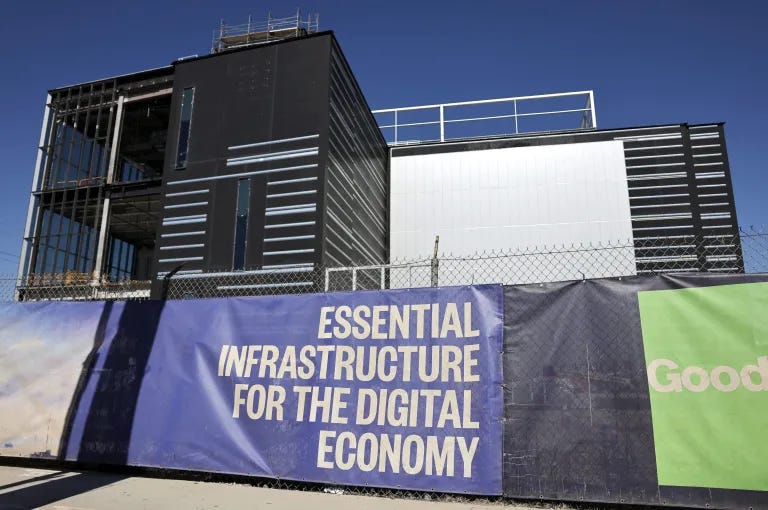
Total data center costs embedded in PJM auctions since 2024 now amount to approximately $29 billion, a sum that gets passed to households and businesses through higher electricity rates. In Washington DC, Pepco residential customers saw bills rise by an average of $21 per month starting in June 2025, with roughly $10 of that increase tied directly to capacity price increases. The numbers underline a structural mismatch: AI infrastructure is scaling at a pace the existing grid cannot match without massive cost increases to everyone else. (Fortune)
Pennsylvania Governor Josh Shapiro negotiated a price cap that prevented even higher costs, but the cap expires in 2030. Until then, PJM ratepayers are funding a build-out they have no control over and receiving none of the revenue AI generates. This is not a local story. Every major grid market faces versions of the same question: who pays when new load arrives faster than new supply?
Virginia Enacts First US Electricity Consumption Tax on Data Centers
Virginia Governor Abigail Spanberger signed the Commonwealth’s 2026 budget on June 30, creating the first state tax in the US charged directly on data center electricity consumption. The tax, which took effect July 1, charges $0.011 per kilowatt-hour on all power consumed by data centers, whether supplied by utilities or generated on-site. Legislative estimates project the tax will generate $600 million annually for Virginia’s general fund over the next two years. (Kiplinger)
The tax applies to both grid power and behind-the-meter generation, including solar and natural gas turbines, closing the loophole data center operators might otherwise exploit. If annual collections exceed $600 million, the excess gets refunded to data centers on a pro rata basis. The tax sunsets on July 1, 2028, giving Virginia a two-year experiment in metered revenue extraction from the largest power users in the state. (Williams Mullen)
A 500 MW data center running continuously would owe roughly $48 million per year, a 10 percent increase in effective electricity costs. Virginia preserved its sales tax exemption on data center equipment while adding this consumption charge, a compromise that keeps the state competitive for new projects while clawing back some revenue through operational costs. The tax does not discourage data centers, it just ensures the state extracts value from the electrons they burn. Watch for other states to copy this model. (Data Center Knowledge)
New York Enacts First State Moratorium on Hyperscale Data Centers
Governor Kathy Hochul signed an executive order on July 14 pausing state environmental permits for one year on new “hyperscale” data centers, defined as facilities that draw 50 megawatts or more of power, enough to run roughly 40,000 homes. The order directs Empire State Development to publish a Community Investment Framework within 60 days, giving local governments a template for negotiating benefits before new projects break ground. New York becomes the first state to freeze hyperscale data center permitting outright, rather than simply studying the grid strain. (NY Governor’s Office)

The move follows months of rising electricity bills across the Northeast tied to new data center demand, the same dynamic driving PJM’s cost spike above. Hochul framed the pause as protecting ratepayers and the environment while New York builds a permanent regulatory framework instead of approving projects case by case. Watch whether other states under similar grid strain, from Georgia to Ohio, follow with pauses of their own. (CNBC)
White House Plans to Expand Ratepayer Protection Pledge to Utilities
The White House is organizing an event in the coming weeks to expand its Ratepayer Protection Pledge, first signed in March by Amazon, Google, Meta, Microsoft, OpenAI, Oracle, and xAI, to include electric utilities, data center developers, and state governors, according to sources cited July 13. The original pledge commits signatories to cover the cost of new power plants, grid upgrades, and unused reserved capacity themselves, instead of passing those costs to existing electricity customers. A White House official said the pledge “has been so impactful that additional stakeholders also want to sign it.” (US News)
Pulling utilities into the pledge would mark a shift from voluntary tech company commitments toward something closer to an industry norm. The White House was still finalizing the guest list and event date as of this writing. If utilities sign on, it could become the template other states point to when writing their own data center cost allocation rules, including New York’s new moratorium above. (Virginia Business)
Four US Microreactors Achieve Criticality by July 4 Deadline
Four advanced nuclear microreactors reached criticality, the point where a reactor sustains a self-supporting chain reaction, by July 4, 2026, exceeding President Trump’s goal of three reactors under the Department of Energy’s Reactor Pilot Program. Aalo Atomics became the fourth company to hit the milestone early July 4 at Idaho National Laboratory, following Antares Nuclear on June 4, Valar Atomics on June 22, and Deployable Energy on July 1. (World Nuclear News)
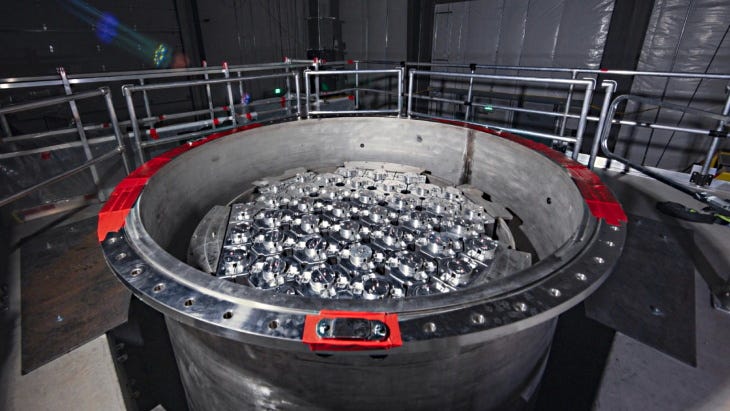
Aalo’s Critical Test Reactor went from groundbreaking to criticality in less than eight months, one of the fastest reactor builds in modern American history. The reactor includes a full-scale core demonstrating the nuclear components of Aalo’s 10 MWe reactors, which will be deployed in 50 MWe Aalo Pods designed specifically to power AI data centers. The company has already begun work on a second reactor at INL, dubbed Project Ascension, which will produce electricity for an on-site data center in the coming months. (Business Wire)
The Reactor Pilot Program, launched in June 2025, allows reactor developers to partner with DOE and use DOE authorization instead of the traditional NRC licensing route, dramatically accelerating development timelines. Deployable Energy’s Unity reactor achieved criticality in roughly 150 days, a benchmark for execution speed that proves the US can still build nuclear reactors quickly when regulatory pathways are clear. Energy Secretary Chris Wright praised the achievement as proof America can “execute again” on nuclear innovation. (DOE)
These are test reactors, not commercial plants. But they demonstrate the technology works and the supply chain exists to manufacture fuel, components, and reactor systems at scale. The goal is 400 GW of US nuclear capacity by 2050, with microreactors serving military bases, data centers, and industrial facilities. Every major hyperscaler has signed nuclear deals totaling more than 9.8 GW of committed capacity. The July 4 deadline was symbolic, but the execution was real.
Eight States Move to Sue Over Offshore Wind Lease Buyouts
Eight East Coast states notified the federal government on July 16 that they plan to sue over the Trump administration’s cash buyouts of offshore wind leases held by developers Invenergy and Bluepoint Wind. California filed its own separate notice, challenging a $111 million buyout of Invenergy’s Morro Bay lease, a site permitted for up to 2 GW of offshore wind capacity, enough to power more than half a million homes. The administration has now spent more than $2.5 billion buying out eight offshore wind leases nationwide. (California DOJ)
California argues the buyouts violate federal law by using taxpayer funds to settle litigation that was never actually filed. The administration is redirecting some of that buyout money toward new natural gas plants in Indiana, Wisconsin, Iowa, and Kansas, a direct trade of offshore wind capacity for gas generation. The fight adds a new legal front to an offshore wind pipeline that keeps shrinking even as AI data centers keep pushing power demand higher. (E&E News)
Microsoft Opens $3.3 Billion Wisconsin Data Center
Microsoft opened its first data center at the Mount Pleasant campus in Wisconsin, a $3.3 billion facility that began limited operations and is now fully online. The project, which started construction years ago, has become one of Microsoft’s highest-profile AI infrastructure developments. The campus is designed to support multiple data center buildings as Microsoft scales capacity to meet Cloud and AI demand. (Data Center Knowledge)

Wisconsin continues to attract hyperscale investment, but the state also faces growing tension over data center costs. Oracle recently asked a Wisconsin court to overturn state utility regulators’ decision requiring hyperscale developers to post hundreds of millions of dollars in financial security before connecting to the grid. The case represents an early legal test of how states allocate the financial risks of powering AI infrastructure, particularly when data centers may abandon projects or demand levels change after grid upgrades are built. (Data Center Knowledge)
Have fun this weekend,
Will
Sources
AI Bumps Power Cost 60% as Mega US Grid Fails to Hit Supply Goal | Insurance Journal
Virginia Approves First-of-Its-Kind Data Center Power Consumption Tax | Kiplinger
Virginia Budget Creates New Electricity Consumption Tax for Data Centers | Williams Mullen
Virginia Approves First-Ever Data Center Power Tax | Data Center Knowledge
New York becomes first U.S. state to impose AI data center ban | CNBC
White House to Rally Utilities, Data Centers for AI Power Cost Pledge, Sources Say | US News
New Data Center Developments: July 2026 | Data Center Knowledge
Criticality for fourth US microreactor to meet 4 July deadline | World Nuclear News
Aalo Atomics Achieves Criticality Milestone; Meets Executive Order Goal | Business Wire
States threaten legal fight over Trump plan to cash out offshore wind leases | E&E News