

Tesla and SpaceX Confirm $16.8 Billion Terafab Chip Factory in Texas
Tesla and SpaceX officially confirmed that their jointly developed semiconductor factory, called Terafab, will be built in Grimes County, Texas, with an initial investment of $16.8 billion and a planned workforce of at least 3,000 people. The facility will be insanely huge. It will be over 4 miles long and span more than 100 million square feet, making it over ten times the size of Tesla’s Gigafactory Texas. The project, announced in March, finally got county-level confirmation in August when Texas government filings listed a planned construction start of December 1, 2026, with completion by the end of 2028. (Quartz)
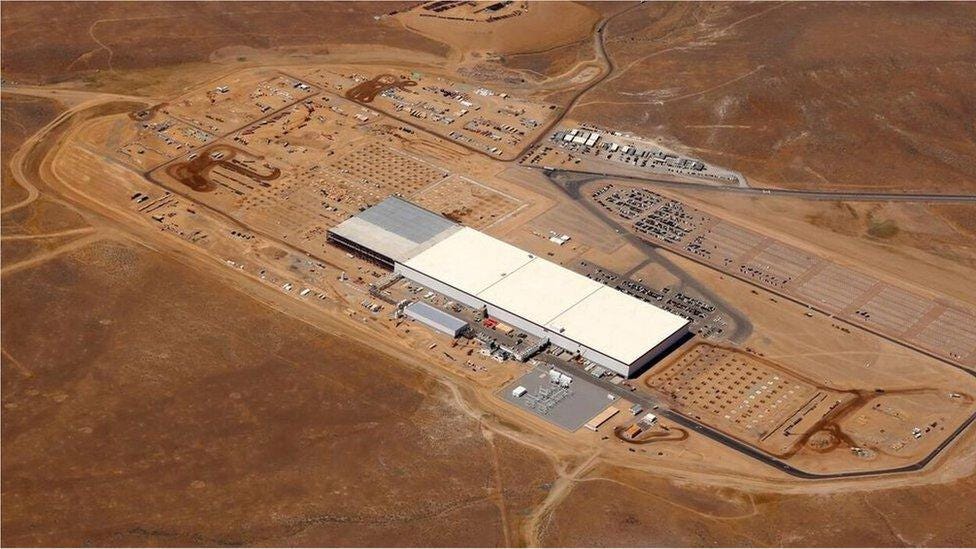
SpaceX says it will bring logic chips, memory, packaging, and testing together at a single site, designed to produce AI chips at scale for use on Earth and in space. The chips will power Tesla’s Optimus robots and Cybercabs, as well as SpaceX’s planned space-based data centers. County filings from May discussed an initial outlay of about $55 billion across all phases of the facility, with the $16.8 billion figure representing the first committed phase.
Anthropic Commits $45 Billion to Nscale for West Virginia Data Center Capacity
Anthropic has signed a $45 billion, six-year rental agreement with Nscale for approximately 460 megawatts of compute capacity at the Monarch Compute Campus in Mason County, West Virginia, according to reports from Bloomberg, CNBC, and Reuters in late August. A megawatt is one million watts of electrical power, enough to supply about 750 to 1,000 homes. The deal grants Anthropic access to the first of three planned buildings at the 2,250-acre campus, which is being developed alongside the American Intelligence & Power Corporation. (CNBC)
Microsoft previously held a letter of intent for the same location with plans for up to 1.35 gigawatts of capacity but walked away in summer 2026 without penalty. The contract will cover Nvidia Vera Rubin AI chips, expected to come online late next year, with power provided by Caterpillar fast-response natural gas generators in a purpose-built AI micro-grid. This is Anthropic’s eighth major compute corridor. The company filed a confidential S-1 in June targeting an October IPO at a $965 billion valuation and has previously signed a $50 billion partnership with Fluidstack and major expansions with Amazon, Google, and SpaceX.
Siemens Energy to Supply Rolls-Royce SMR Turbine Components in UK
Key steam turbine components for Rolls-Royce SMR’s first three small modular reactors at the Gwyndod project on Anglesey in North Wales will be manufactured at Siemens Energy’s historic CA Parsons Works site in Newcastle, England. High-pressure turbines and valve casings will be produced at the facility, marking the first time SMR components will be produced in Europe and the return of large domestic steam turbine production to the UK for the first time in over 20 years. The contract, announced in early September, is expected to support and create more than 550 skilled jobs in the region. (Nuclear Engineering International)
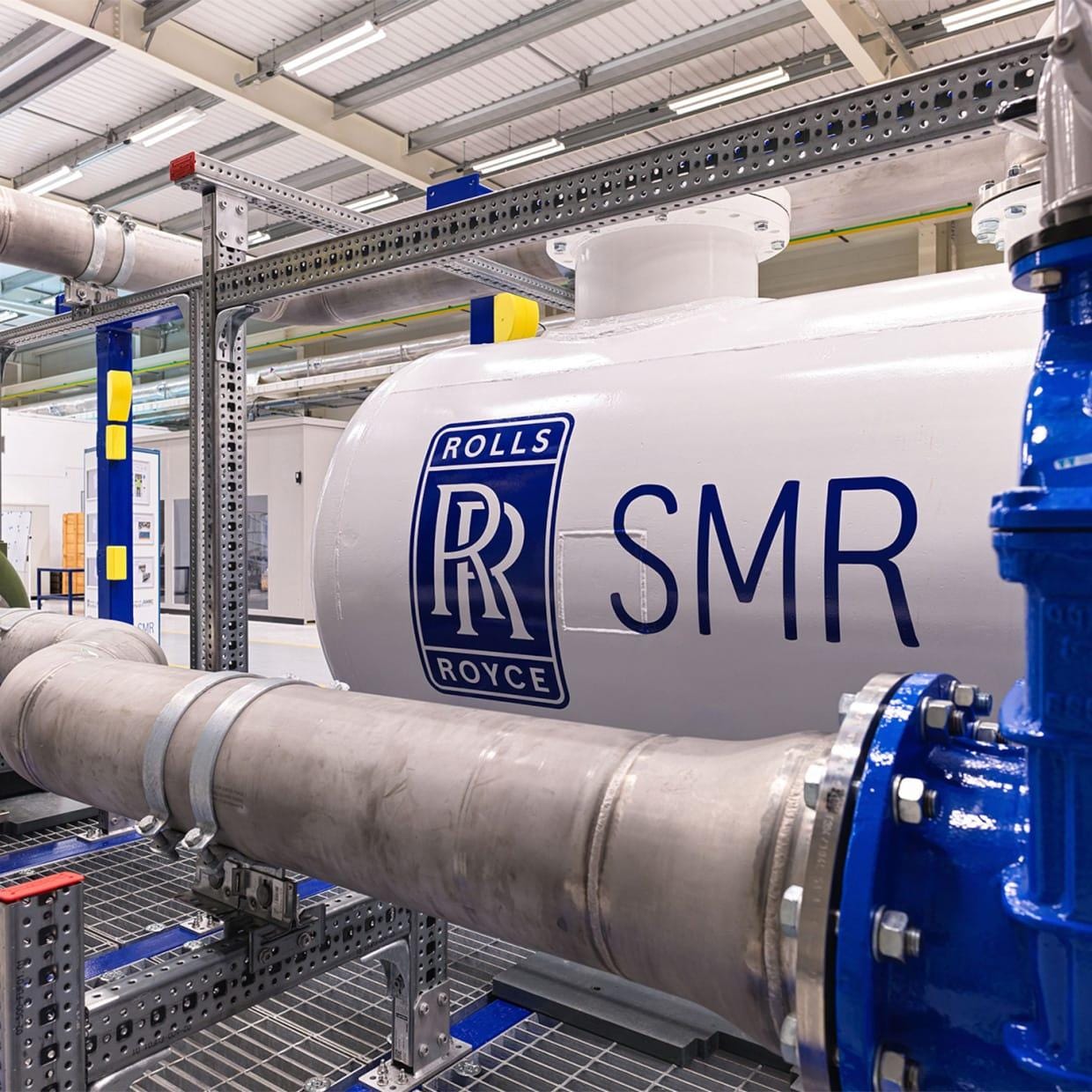
A small modular reactor is a nuclear reactor with a power output typically under 300 megawatts, designed to be factory-built in modules and assembled on site. Rolls-Royce SMR’s pressurized water reactors are designed to produce up to 470 megawatts of electricity each, enough to supply approximately 1.1 million households. The Newcastle site will serve as the official service hub for Siemens Energy’s core components across the broader planned Rolls-Royce SMR UK fleet. Siemens Energy is the sole supplier of steam turbines, generators, and auxiliary systems for the UK SMR program.
Oklo Files Emergency Complaint After PJM Drops 750 MW Mixed Project
Oklo filed an emergency complaint with FERC on August 28 after PJM Interconnection, the regional grid operator covering the Mid-Atlantic and Midwest, withdrew a 750-megawatt mixed-technology project from its interconnection queue. The project combines 150 MW of advanced nuclear, 300 MW of fuel cells, and 300 MW of natural gas generation at a planned site in Ohio. PJM cited application shortcomings, including Oklo not showing the project could ride through a sudden drop in grid voltage, a technical requirement for grid stability. (Utility Dive)
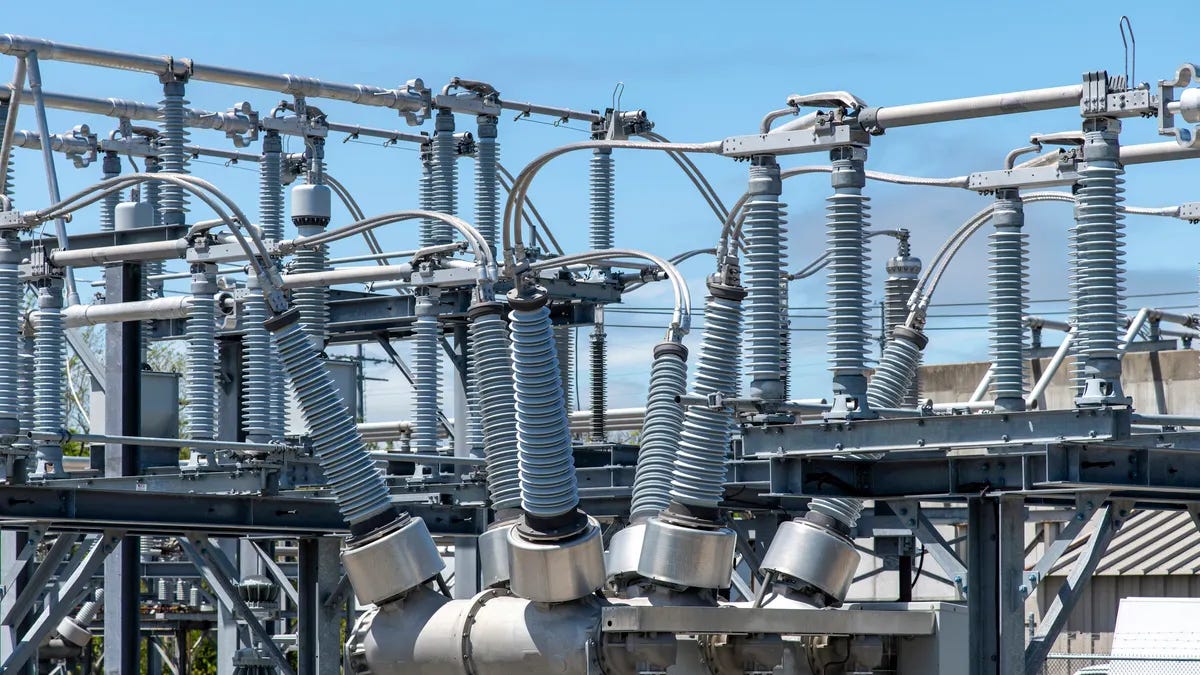
Oklo says the removal will delay the project by at least 14 months and significantly increase development costs. The company argues PJM violated its own tariff by failing to flag problems early enough to allow Oklo a meaningful opportunity to fix them. The project sits inside Oklo’s planned 1.2-gigawatt power campus in Pike County, Ohio, which Meta Platforms agreed to back in January 2026 to supply its data centers. PJM responded on September 4, stating Oklo submitted a deficient model and that reinstatement would require rebuilding the entire Phase I study cycle.
European Investment Bank Makes First SMR Investment with €40 Million to Steady Energy
The European Investment Bank announced its first-ever investment in small modular reactor technology on September 15, providing up to €40 million (approximately $46 million) to Finnish nuclear startup Steady Energy. The InvestEU-backed financing will accelerate the company’s development of a heat-only small modular reactor designed to supply carbon-free district heating. Steady Energy’s 50-megawatt LDR-50 reactor is designed to supply heat exclusively to district heating networks, rather than generating electricity, making it simpler and cheaper to build and operate. (European Investment Bank)
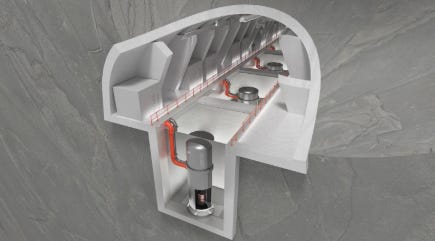
District heating is a system where hot water or steam is distributed through underground pipes to heat multiple buildings from a central source, common in northern Europe. Unlike conventional nuclear plants, Steady Energy’s lower-pressure design produces heat as its main output rather than generating electricity first, supplying district heating systems directly. Steady Energy was spun out from Finland’s state-owned Technical Research Centre in 2023, employs around 75 people, and is building a non-nuclear pilot facility in Helsinki to test key safety systems and support the licensing process. The funded activities will be carried out in Finland between 2026 and 2028.
Crusoe Raises Over $3 Billion at $30 Billion Valuation
Crusoe Energy Systems secured over $3 billion in a Series F funding round at a $30 billion post-money valuation in early September, co-led by Atreides Management and Valor Equity Partners, with participation from Mubadala Capital. The Denver-based company, which builds AI cloud computing infrastructure and hyperscale data centers, will use the capital to fund data center construction, purchase massive fleets of GPUs, and expand its global project development pipeline, which sits at over 40 gigawatts of total capacity. (FinSMEs)
Crusoe is developing the 1.2 GW Abilene, Texas campus for OpenAI and Oracle, the first of the Stargate data center projects, with the first phase live since September 2025. The company is also planning a 1.8 GW campus in Wyoming and natural gas-powered data centers in Alberta, Canada.
The valuation jumped from $10 billion in October 2025 to $30 billion in nine months. Crusoe has raised around $5.77 billion to date across 16 rounds of debt and equity financing and has held preliminary meetings with investment banks regarding a near-term IPO.
Microsoft Plans 38 Gigawatts of Data Center Capacity by 2032
Microsoft plans to expand its global data center capacity to more than 38 gigawatts by 2032, more than triple its current footprint of about 12 gigawatts, according to a September 10 report from Bloomberg citing people familiar with the plans. The buildout covers company-owned and leased facilities but excludes computing power rented from neocloud providers such as CoreWeave. Only about 2 gigawatts of Microsoft’s current capacity is centered on AI-specific chips, a share expected to grow to about a third of the 38-gigawatt total. (Investing.com)

Microsoft has not confirmed the figure in any press release, earnings call, or regulatory filing, and did not respond to a Reuters request for comment. The company is projected to spend up to $190 billion in calendar year 2026 on total capital expenditures, with infrastructure and electricity buildout pacing at $145.3 billion for its latest fiscal year. Microsoft has committed to covering 100% of the localized electricity price increases caused by its facilities. In June the company announced a 20-year PPA with Chevron to build a co-located, dedicated 2.7-gigawatt natural gas power facility for a new Texas data center.
IREN Delivers First AI Data Center Phase to Microsoft in Texas
IREN Limited announced in mid-August that it has delivered Horizon 1, the first of four planned 50-megawatt data centers, to Microsoft at its Childress, Texas campus. The delivery represents the initial phase of a five-year, $9.7 billion cloud services contract announced in November 2025. IREN plans to deliver three additional 50 MW facilities to Microsoft later this year at the same location, bringing a combined 200 megawatts of new AI-ready capacity online within a single year. (Data Center Dynamics)
Horizon 1 uses direct-to-chip liquid cooling, a method where coolant is pumped directly onto chips rather than relying on air circulation, allowing much higher power densities. The company, formerly known as Iris Energy, is winding down Bitcoin mining operations and targets 480 MW of AI Cloud capacity in 2026 and 1.2 GW in 2027. The contract is expected to generate roughly $1.94 billion in annualized revenue once all four Horizon facilities are running.
Meta and Apex Clean Energy Sign 144 MW Texas Solar PPA
Meta and Apex Clean Energy signed a power purchase agreement for the 144-megawatt Starling Solar project in Gonzales County, Texas, with commercial operations expected in 2027. A power purchase agreement, or PPA, is a long-term contract where a buyer agrees to purchase electricity from a project at a set price before it is built, guaranteeing the revenue that makes financing possible. This is the seventh transaction between the two companies, whose combined portfolio now spans Texas, Virginia, Illinois, Kansas, and Iowa and totals approximately 1,200 megawatts. (Utility Dive)
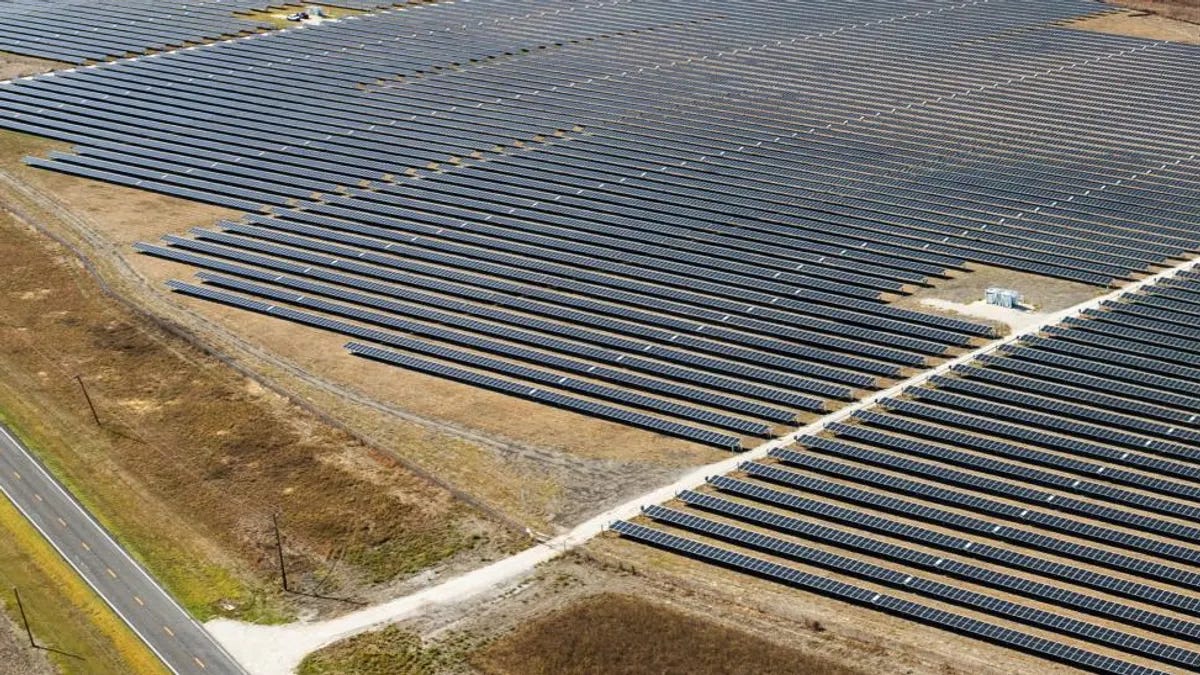
Meta will receive all renewable energy credits from the project, the certificates that verify electricity came from a clean source. The company has separately announced plans to secure up to 6.6 gigawatts of nuclear capacity through partnerships with Vistra, Oklo, and TerraPower.
Hitachi Energy Invests $528 Million in New Mississippi Transformer Factory
Hitachi Energy announced a $528 million investment to build a new transformer manufacturing plant in Gallman, Mississippi, roughly six miles from its existing Crystal Springs facility, with construction starting late 2026 and production beginning in 2029. The new plant will more than double Hitachi Energy’s US production capacity for small and medium-sized power transformers and create more than 700 jobs. Transformers are the heavy steel devices that step electrical voltage up or down at every point in the grid, and domestic lead times now stretch three to four years for many types. (Hitachi Energy)
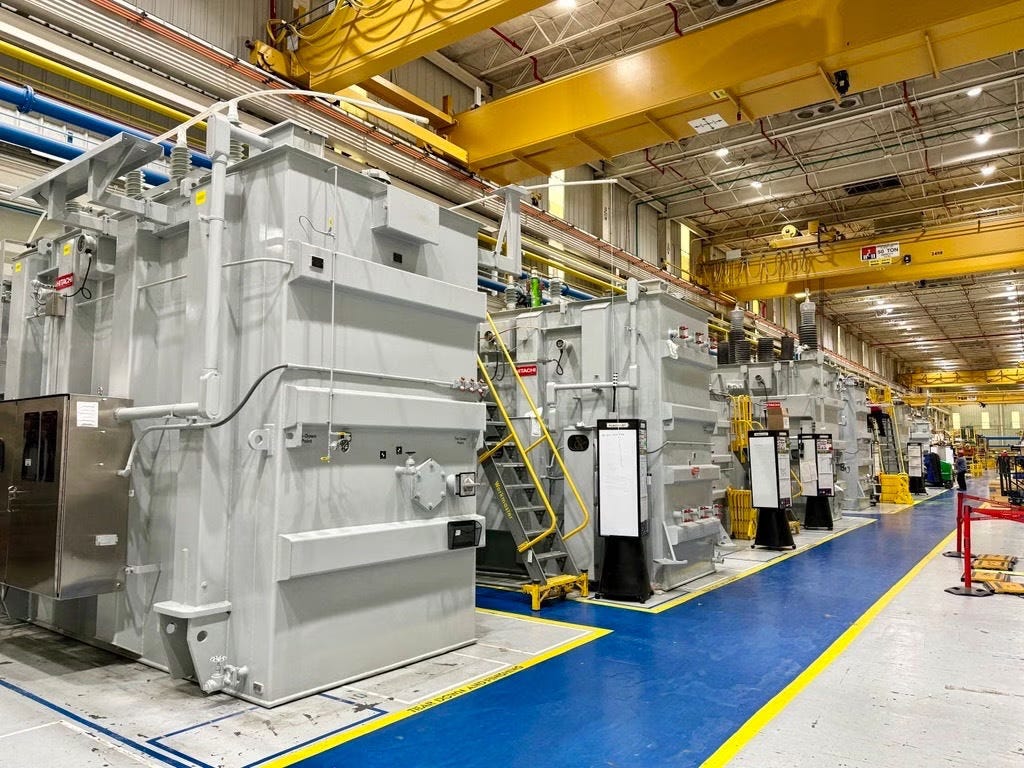
The plant will produce transformers in the 10 to 160 megavolt-ampere range at voltages up to 230 kilovolts, the class of equipment required for substation upgrades that data center interconnections demand. Domestic transformer lead times currently stretch three to four years for many types. Construction begins late 2026 with production starting in 2029.
SRP Board Approves 1.675 GW Marigold Energy Center to Serve Arizona Data Centers
The Salt River Project board approved the Marigold Energy Center on September 14, a 1.675-gigawatt mixed-resource project in Stanfield, Arizona combining 600 megawatts of solar, 400 megawatts of eight-hour battery storage, and 675 megawatts of natural gas. Salt River Project is a public utility serving the Phoenix metro area, one of the fastest-growing data center markets in the country. SRP explicitly cited surging load growth from data centers and large industrial customers as the primary driver. (Utility Dive)
The project will include its own 230-kilovolt and 500-kilovolt substation and four miles of new transmission lines. It now heads to Arizona’s ACC siting committee for hearings September 21-25, with a final decision expected in November.
Have fun this week,
Will
Sources
Tesla and SpaceX to invest $16.8B in Terafab chip factory in Texas | Quartz
Anthropic and Nscale strike $45 billion cloud deal, sources say | CNBC
R-R SMR turbines get UK build | Nuclear Engineering International
PJM drops Oklo advanced nuclear project from interconnection study cycle | Utility Dive
Microsoft plans 38 gigawatts of data center capacity by 2032, Bloomberg News reports | Investing.com
Iren delivers first phase of AI capacity to Microsoft in Texas | Data Center Dynamics
Meta, Apex Clean Energy agree to 144-MW Texas solar PPA | Utility Dive
SRP to propose up to 1.7-GW mixed-resource project to its board in September | Utility Dive