

Pennsylvania Governor Shapiro Restricts Data Center Development, Requires Developers to Bring Their Own Power
Pennsylvania Gov. Josh Shapiro signed a sweeping executive order on August 18 that restricts new data center development across the state. Under the order, data center projects with peak demand above 25 megawatts must make a legally binding commitment to source their own new electricity supply before the state’s Department of Environmental Protection will even begin reviewing their permits. Developers must also pay for any grid upgrade costs tied to their project rather than distributing those costs across other ratepayers, and they are prohibited from using nondisclosure agreements in dealings with local communities. New data center proposals have been removed from Pennsylvania’s fast-track permitting process entirely. (Utility Dive, E&E News)

Shapiro was one of the most data center-friendly governors in the country. He personally championed Amazon’s $20 billion commitment to build at least two data centers in Pennsylvania and was openly trying to attract more projects. That same governor just made Pennsylvania significantly harder to build in. When a pro-growth Democrat decides the politics have shifted, they have shifted.
Watch whether other mid-Atlantic governors follow. New Jersey, Virginia, and Ohio have all absorbed massive data center loads in recent years, and the ratepayer cost-shifting argument is the same in each of those states.
TerraPower Plans a Second Natrium Nuclear Reactor for an Undisclosed AI Data Center Customer
TerraPower, the Bill Gates-backed nuclear developer with its first commercial reactor under construction in Kemmerer, Wyoming, announced on August 18 that it plans to break ground on a second reactor in 2027, this one designed specifically to power an AI data center. CEO Chris Levesque declined to name the customer. The second project would be a 345-megawatt Natrium reactor, a design that uses molten sodium as coolant and routes surplus heat into a molten salt energy storage tank, allowing the plant to rapidly ramp up electricity output during demand spikes rather than operating at fixed output the way conventional reactors do. (Bloomberg, TechCrunch)
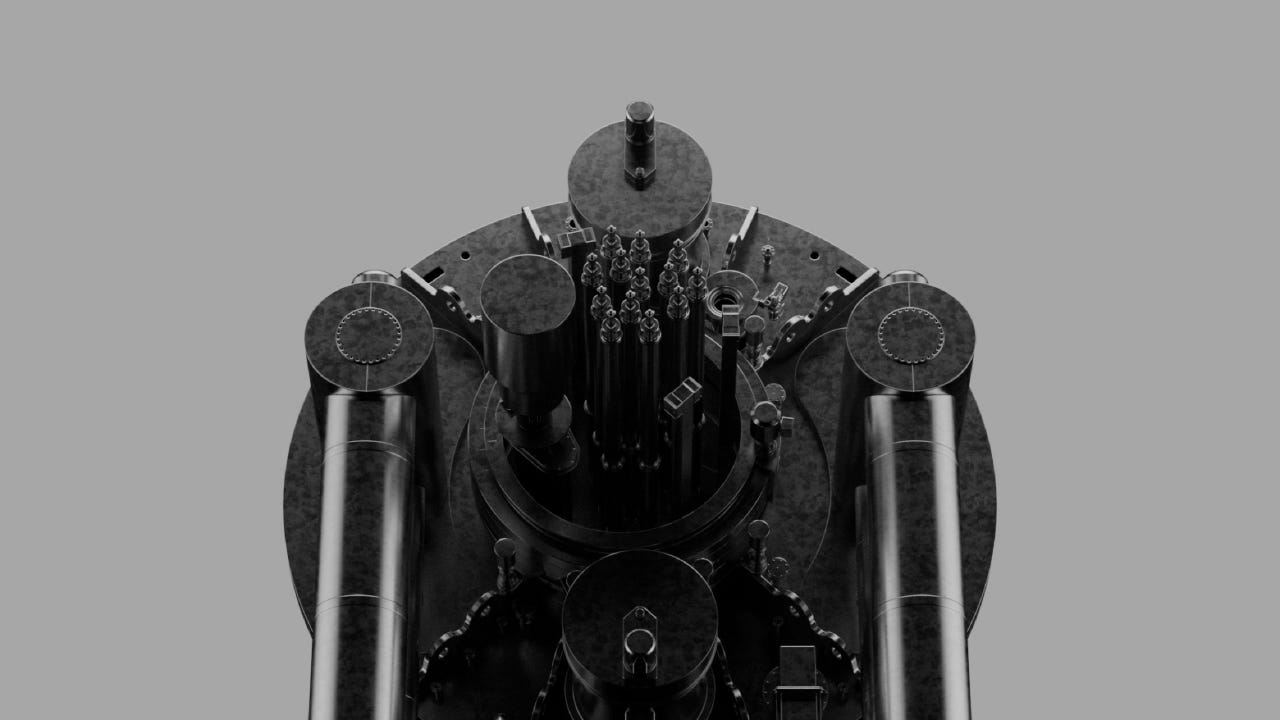
Most nuclear plants produce power at a fixed rate because you cannot easily turn a fission reaction up and down. TerraPower’s design sidesteps that by storing heat when electricity prices are low and converting it to electricity when demand spikes, meaning it can follow a data center’s variable load rather than the data center having to flatten its own consumption. That is a significant advantage over rivals pitching traditional SMR designs for AI power.
TerraPower announced in January that Meta had agreed to buy eight of its Natrium plants. The undisclosed second-project customer could be the same Meta agreement advancing to a site-specific phase, or a different buyer entirely.
Texas Freezes New Data Center Grid Connections Pending Statewide Audit
Texas Gov. Greg Abbott directed the Public Utility Commission and ERCOT on August 3 to conduct a comprehensive audit of all data center projects in ERCOT’s interconnection queue before any new projects can advance. ERCOT immediately announced it would pause its Batch Zero interconnection study process, missing its August 7 deadline. Data centers account for roughly 90 percent of the 474 gigawatts of requests to connect to the Texas grid, a number more than five times ERCOT’s all-time peak electricity demand. The audit will review tax incentives, on-site generation, water use, cooling technology, and project ownership. (Utility Dive, Holland & Knight)
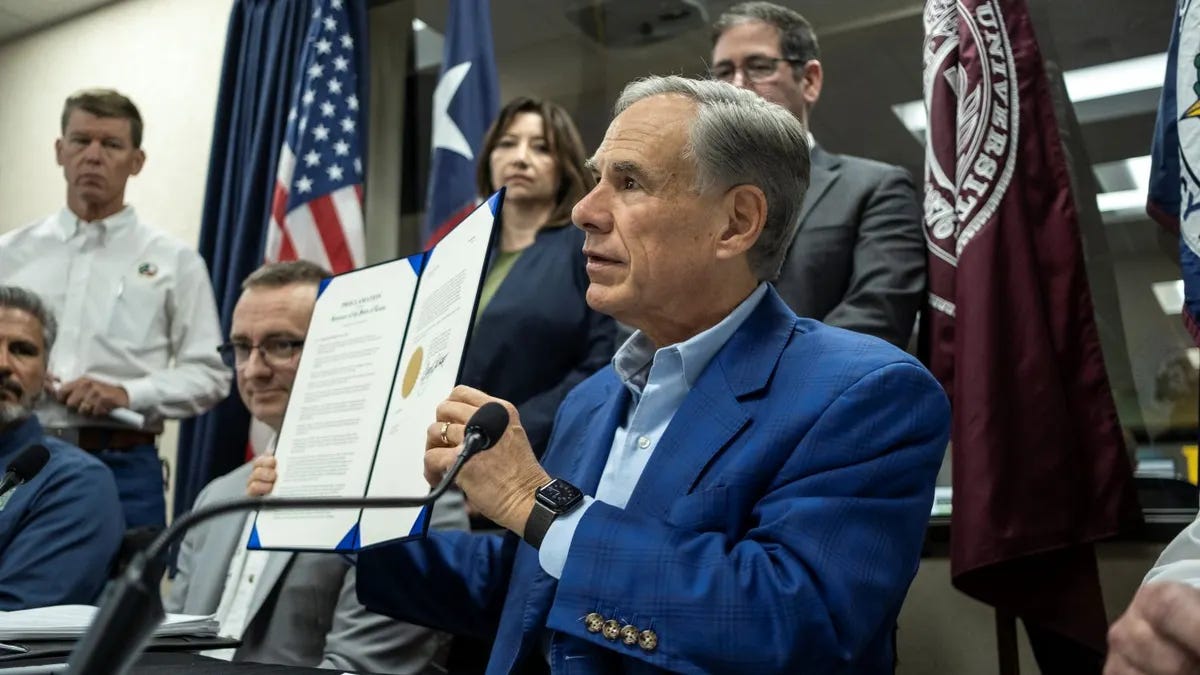
This is the same Texas that built the most data center capacity of any state by leaning hard on deregulation and cheap power. The 474-gigawatt figure tells you why the pause happened: ERCOT cannot process speculative applications at this scale without knowing which projects are real, and the grid planning math breaks completely if phantom demand distorts every forecast. The audit will likely take several months, freezing a significant portion of the pipeline in the state where more projects are queued than anywhere else in the country.
PJM Files Data Center Curtailment Rules and Backstop Capacity Auction at FERC
PJM Interconnection, the grid operator for 65 million people across 13 states, filed a proposal at FERC on August 7 that would allow it to curtail data centers and other large loads that do not bring their own power supply when grid conditions approach emergency levels. PJM’s board also approved a one-time reliability backstop capacity auction, running September 30 to October 21, to fill a 6.8-gigawatt shortfall from the grid operator’s last base capacity auction. The auction cap is set at $555 per MW-day, up from the previous $325 ceiling. Data centers can avoid curtailment exposure by committing to the “Bring Your Own New Capacity” (BYONC) framework, which requires them to contract new generation rather than relying on existing grid supply. (Utility Dive, Data Center Knowledge)
PJM is telling data centers what the Texas and Pennsylvania governors are also telling them: grid access is no longer free. If you want reliable power without curtailment risk, contract the generation yourself. The backstop auction fills a real capacity gap that grew as data center load forecasts expanded after the base auction closed. Anyone who signed an interconnection agreement in PJM without a generation contract behind it is now looking at explicit curtailment exposure.
OpenAI’s $20 Billion Georgia Data Center Hits Regulatory Roadblock
OpenAI announced in July a planned $20 billion data center in Effingham County, Georgia, called Project Camellia, with 3.2 gigawatts of power committed from Georgia Power delivered in phases between 2028 and 2032. On August 14, Georgia Power voluntarily delayed the start date of its 25-year service agreement after state regulators signaled they would reject the contract structure. Georgia regulators objected to whether the deal adequately protects residential ratepayers from cost shifts tied to the largest single electricity customer in state history. The project would consume roughly one-third the output of Plant Vogtle’s two new nuclear reactors. (Atlanta Journal-Constitution, E&E News)
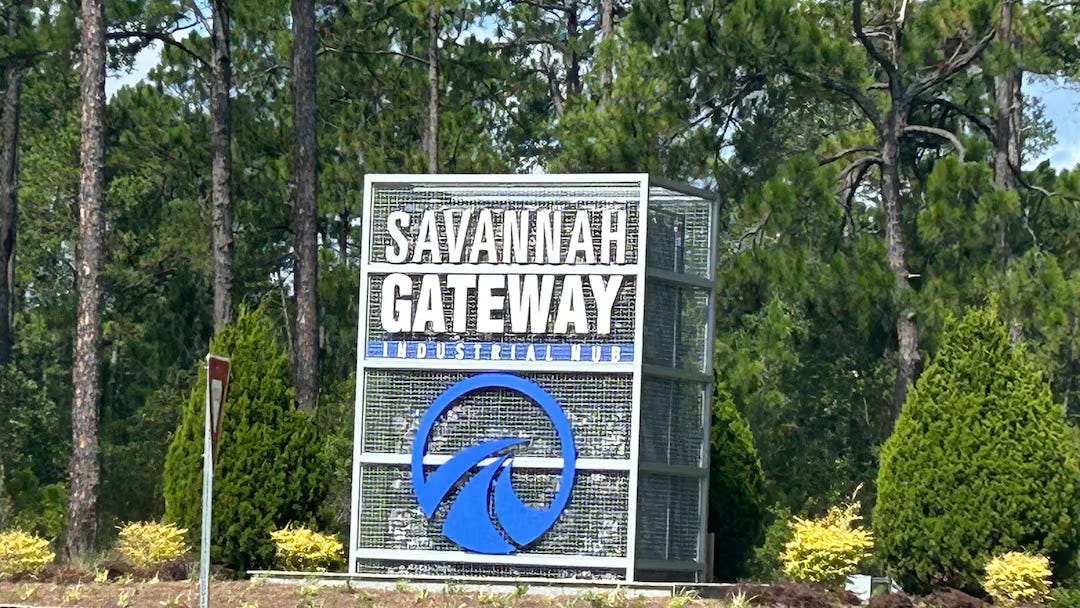
The Camellia deal included a $80 million community fund and up to $71 million in education credits for Georgia students. OpenAI also agreed to pay full infrastructure costs and reduce consumption during peak demand. Regulators pushed back anyway. This is the new reality for gigawatt-scale projects: utility contracts require regulatory approval, and regulators are increasingly focused on who pays for the transmission and generation capacity behind each deal.
Oklo Achieves First Criticality at Texas Test Reactor in Under 11 Months
Oklo announced on August 6 that its Groves Isotope Test Reactor in Lockhart, Texas, achieved first criticality less than a year after breaking ground. Criticality means the nuclear chain reaction has become self-sustaining enough to produce a steady, controlled release of energy. The reactor is the first under the DOE’s Reactor Pilot Program to reach criticality on private land from a greenfield site, and Oklo handled civil excavation, construction, component manufacturing, and fuel procurement entirely in-house. (Bloomberg)
Nuclear projects in the U.S. have historically taken a decade or more from permit to operation. Oklo did it in under eleven months at this test scale. The test reactor establishes operational proof before Oklo’s commercial 75-megawatt Aurora powerhouse, targeted for Idaho National Laboratory in late 2027 or early 2028, and before its contractual obligation to supply a 1.2-gigawatt campus for Meta in Ohio beginning around 2030. Oklo stock jumped roughly 15 percent the day after the announcement.
Micron Announces $10 Billion AI Memory Research Hub in Boise
Micron Technology announced on August 20 the creation of Micron Research Labs, a new U.S.-based research institution backed by a planned $10 billion investment over the next decade, headquartered in Boise, Idaho. The company describes it as the first dedicated memory research hub of its kind in the United States, focused on next-generation memory technologies, advanced computing architectures, and semiconductor packaging. Micron plans to break ground on a purpose-built facility in 2027, with the site eventually housing hundreds of researchers. (Yahoo Finance, Evertiq)
High-bandwidth memory is already one of the tightest components in the AI supply chain, with Nvidia’s H100 and Blackwell chips consuming more HBM than the industry can currently produce. A $10 billion domestic research commitment directly addresses a choke point that sits upstream of the data center power conversation. Micron shares rose about 2.2 percent on the news.
Have fun this week,
Will
Sources
Pennsylvania dangles permitting carrot for data centers that bring their own power | Utility Dive
Pennsylvania Gov. Shapiro signs order to limit new data centers | E&E News
Gov. Josh Shapiro signs executive order restricting data center development | Philadelphia Inquirer
Gates-Backed TerraPower to Announce Second Nuclear Plant This Year | Bloomberg
TerraPower’s nuclear reactor has a secret weapon for powering AI data centers | TechCrunch
Texas Gov. Abbott Directs Data Center Audit; ERCOT Pauses Interconnection Process | Holland & Knight
PJM files backstop auction plan at FERC to meet capacity shortfall | Utility Dive
PJM’s New Deal for Data Centers: Bring Power or Face Cuts | Data Center Knowledge
OpenAI forced to delay plans for $20B data center in Georgia | E&E News
Oklo’s Small Modular Reactor Achieves Criticality, US Energy Department Says | Bloomberg
Micron unveils $10 billion U.S. research lab focused on memory and AI | Yahoo Finance
Micron unveils $10 billion AI memory research lab in Boise | Evertiq