

OpenAI Announces $30 Billion Georgia Data Center With 3.2 GW Power Deal
OpenAI announced plans to spend more than $30 billion on a massive data center complex near Savannah, Georgia, securing 3.2 gigawatts of power from Georgia Power in what may rank as one of the largest single-site AI infrastructure projects to date. The facility, called Project Camellia, will receive several hundred megawatts starting in 2028, with the full buildout extending through 2032. One gigawatt powers roughly 750,000 US homes at any given time, so this single campus could eventually consume as much electricity as 2.4 million homes (Bloomberg).
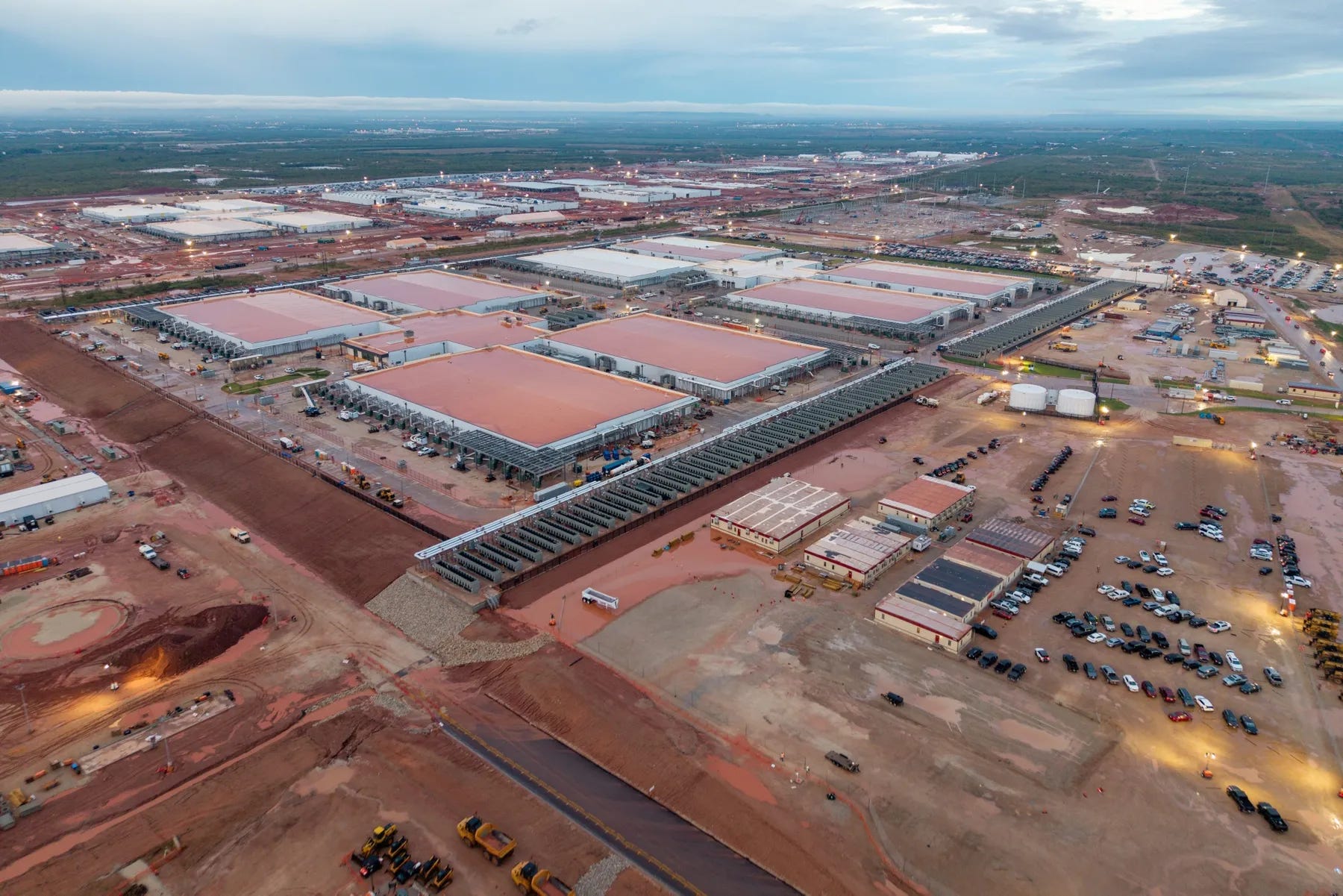
This marks OpenAI’s first self-built data center, a shift from leasing chip capacity from cloud providers like Oracle and Amazon Web Services. The company also raised its total computing infrastructure spending forecast to $750 billion through 2030, up from $600 billion earlier this year. That increase alone, $150 billion, exceeds the annual GDP of more than 130 countries (Quartz).
The project signals that hyperscalers are moving beyond signing power purchase agreements and into direct ownership of generation and data center infrastructure. OpenAI guaranteed that residential electricity prices in Georgia will not increase and committed to reducing power consumption during periods of high demand before impacting other users. Voluntary pledges have never stopped a rate case before, and this one will get its first real test once Georgia Power’s actual cost allocation filings start showing up.
White House Expands AI Power Pledge to 200 Utilities and 23 States
President Trump expanded the Ratepayer Protection Pledge on July 23, adding nearly 200 utilities, data center developers, and 23 state governors to a voluntary agreement first signed by tech companies in March. The pledge now covers 80 percent of all power delivered to US homes and businesses. Under the agreement, data center operators commit to building, bringing, or buying the new generation resources needed for their facilities and paying for all new power delivery infrastructure, rather than passing costs to residential ratepayers (White House).
The expanded pledge remains non-binding and contains no enforcement mechanism. Tariff rules that govern how grid infrastructure costs are allocated to household bills are set by state public utility commissions and FERC, not by voluntary pledges. The commitment does, however, create political pressure on data center developers at a time when 71 percent of Americans oppose AI data center construction in their local communities, according to a recent Gallup poll (Tech Times).
The White House announcement comes as the Ratepayer Protection Act passed the House Energy and Commerce Committee unanimously on July 22, though it still needs full House and Senate votes before becoming law.
DOE’s Genesis Mission Taps Oklo and X-Energy to Speed Up Nuclear Reactors for AI
The Department of Energy said July 22 that its Genesis Mission, a federal push to apply artificial intelligence across scientific research, is directing a $60 million grant to Idaho National Laboratory, Nvidia, Amazon Web Services, and X-energy to use AI to cut the cost of building nuclear reactors in half and speed up construction timelines. A day earlier, advanced reactor developer Oklo joined a related $200 million DOE effort aimed at shortening how long it takes to design, license, and build new plants (Bloomberg).
Genesis Mission drew more than $800 million in commitments from private partners on top of the federal money, part of a broader effort Energy Secretary Chris Wright says will apply AI to problems ranging from reactor design to materials science across nearly 300 total awards. The bet is that AI can shave years off the decade-plus timelines that make new nuclear plants a hard sell for utilities racing to power AI data centers, and pairing reactor developers directly with government supercomputers is a new model for how Washington is trying to speed that up (HPCwire).
Rolls-Royce SMR Adds Two More Czech Sites for New Reactors
The Czech Ministry of Industry and Trade, national utility ČEZ, and Rolls-Royce SMR signed a memorandum of understanding on July 21 to begin preparatory work on small modular reactors, compact nuclear plants built largely from factory-made parts rather than assembled on site, at two additional locations: the Tušimice site in the Ústí nad Labem region and the Dětmarovice site in Moravian-Silesia. Both sites currently host aging coal plants that the Czech Republic is working to replace with lower-carbon generation (World Nuclear News).
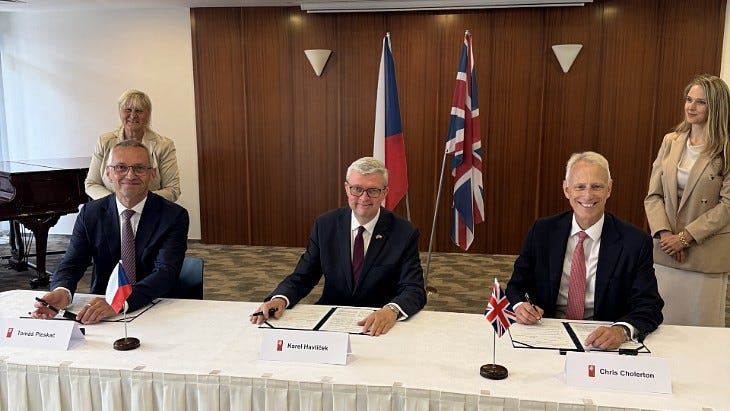
Central and Eastern Europe has become one of the more active regions for early SMR deployment, and this deal extends a partnership between the three parties that is already advancing SMR plans elsewhere in the country. Watch whether the Czech Republic becomes a proving ground that Rolls-Royce can point to when it pitches the same reactor design to customers in the UK and US.
ERCOT Flags Preliminary Record for Texas Summer Power Demand
The Electric Reliability Council of Texas, the operator that keeps the lights on for most of the state, said Tuesday, July 21, that Texas may have set a new preliminary peak demand record, topping the prior high by roughly 2,000 megawatts during a heat wave. ERCOT had already been warning that summer 2026 demand could top 92 gigawatts, one gigawatt powers around 750,000 average US homes, with data centers and cryptocurrency mining adding large, constant loads on top of the usual air conditioning spike (Houston Public Media).
Despite the record, ERCOT put the odds of an actual grid emergency at just 0.21 percent for the month, a reminder that record demand and grid failure are not the same thing. Texas has more data center capacity under construction than any other state, so this kind of record is a preview of what summer peaks will look like for years to come.
India Announces $43 Billion Energy Storage Investment by 2032
India’s Ministry of Power informed Parliament on July 27 that the government plans to invest Rs 3.49 lakh crore ($43 billion) in battery energy storage systems and another Rs 1.29 lakh crore ($16 billion) in pumped storage plants by 2031-32. The plan targets 47.24 GW / 236 GWh of BESS capacity and 26.69 GW / 175 GWh of pumped storage by the end of the decade (ProKerala).
India’s energy storage buildout is driven by renewable integration and the variability of solar generation. The government is backing deployment with $1.09 billion in viability gap funding for 43.2 GWh of BESS capacity, interstate transmission charge waivers for storage co-located with renewables, and production-linked incentives for 50 GWh of advanced chemistry cell battery manufacturing (DC&T Global).

Solar-plus-storage auctions in India have recently cleared at tariffs of $32 to $39 per MWh for four-hour battery systems, and the country’s first six-hour BESS auction in early 2026 came in at $34 per MWh. Those prices are now competitive with new coal power, which is seeing rising tariffs across recent auctions. India’s aggressive storage targets position it as one of the fastest-growing battery markets outside China, which added 167 GWh of storage in 2025 and is expected to add another 203.5 GWh in 2026.
Have fun this week,
Will
Sources
OpenAI Plans to Spend Over $30 Billion on Georgia Data Center | Bloomberg
OpenAI raises planned AI infrastructure spending to $750 billion | Quartz
Oklo, X-Energy Join Trump Effort to Speed New Nuclear Reactors for AI | Bloomberg
DOE Unveils Awards for Nearly 300 Genesis Mission Projects | HPCwire
Two More Czech Sites Lined Up for Rolls-Royce SMRs | World Nuclear News
ERCOT Prepares for Record Demand During Texas Heat Wave | Houston Public Media
Govt to invest Rs 3.49 lakh crore to expand Battery Energy Storage System | ProKerala
India’s BESS Boom: 2026, the Energy Storage Turning Point | DC&T Global