

FERC Sets June Deadline for Large Load Interconnection Rules
FERC committed on April 16 to issue new regulations by the end of June governing how data centers and other large electrical loads connect to the interstate transmission system. The move responds to Energy Secretary Chris Wright’s October 2025 directive asking FERC to accelerate interconnection procedures for loads exceeding 20 megawatts, a category that covers most AI data centers but also includes many big box stores and industrial facilities (POWER Magazine).
The rulemaking tackles three questions that will shape billions of dollars in infrastructure spending. Who pays when a data center requires transmission upgrades? Should costs be socialized across all ratepayers or assigned directly to the customer causing them? And does FERC even have jurisdiction over load interconnection, which has historically been a state matter?
FERC Chair Laura Swett called large load integration “the most important and pressing problem in contemporary American public policy” and signaled she’s willing to push federal authority to its legal limits. The agency has already reviewed more than 3,500 pages of comments. State regulators, meanwhile, warned that federal overreach could disrupt retail rate cases that fall under state jurisdiction (E&E News).
Watch for the June ruling. It will either create a clear national framework for data center development or trigger a wave of litigation that delays projects for years.
Oklahoma Passes Data Center Ratepayer Protection Act
Oklahoma Governor Kevin Stitt signed the Data Center Consumer Ratepayer Protection Act into law in early May, making Oklahoma the first state to mandate that data centers cover their own infrastructure costs. The law requires facilities adding 75 megawatts or more of demand to pay for grid upgrades directly rather than passing costs to residential and commercial ratepayers. It also imposes a 60-day notice requirement before land purchases, giving local communities advance warning of major projects (FOX23).

The bill passed both chambers unanimously with bipartisan support from 36 co-authors. It takes effect July 1, though utilities still need to develop implementation rules. Senator Grant Green framed it as protecting farmers and ranchers from surprise developments. “Data centers won’t be able to buy land without notifying the community,” he said (Oklahoma Energy Today).
Other states are watching. Maryland passed similar legislation in May 2025, and Virginia regulators revised permitting guidance in May 2026 to challenge assumptions that backup generators are rarely used.
SoftBank Announces $85 Billion France Data Center Investment
SoftBank Group announced on May 30 it will invest up to €75 billion, approximately $85 billion, to develop 5 gigawatts of AI data center capacity in France. The first phase targets 3.1 GW in the Hauts-de-France region by 2031, with sites in Dunkirk, Bosquel, and Bouchain. State-owned utility EDF is providing the site of a former power plant in Bouchain and partnering on power supply (Data Center Knowledge).
The deal highlights why access to reliable electricity is becoming the decisive factor in data center site selection. France offers competitive nuclear power and existing grid infrastructure at decommissioned industrial sites. SoftBank founder Masayoshi Son said France’s energy position “was absolutely decisive in our decision.”
SoftBank is simultaneously funding the Stargate program in the U.S. and proposing a 10 GW site in Ohio. Analysts from TD Cowen noted the company has over $130 billion in debt and questioned how it will fund all announced projects.
Google Signs 1 GW Texas Solar Deal with TotalEnergies
Google and TotalEnergies signed two 15-year power purchase agreements on February 9 to deliver 1 gigawatt of solar capacity to Google’s Texas data centers. The electricity will come from TotalEnergies’ 805 MW Wichita and 195 MW Mustang Creek solar projects, with construction starting in the second quarter of 2026. The deal will deliver 28 terawatt-hours of electricity over the contract term (TotalEnergies).
TotalEnergies called it the largest renewable PPA it has signed in the U.S. The agreement adds to separate 1.2 GW PPAs that Clearway, a company 50% owned by TotalEnergies, signed with Google for projects across Texas, the Northeast, and Central U.S.
The scale is impressive. The tension is that solar only generates power during daylight while data centers run 24/7. Google will still rely on the broader Texas grid for balancing at night and during cloudy periods.
NRC Approves NuScale’s Uprated SMR Design
The Nuclear Regulatory Commission approved NuScale Power’s uprated 77 MWe small modular reactor design on May 28, 2025, completing its technical review ahead of schedule and under budget. This is NuScale’s second approved design, the previous 50 MWe version was certified in 2020, and makes it the only SMR company with NRC design approval (Utility Dive).
A standard design approval means the reactor meets NRC safety requirements. Companies still need separate permits to construct and operate plants using the design. NuScale said the larger modules will better serve hyperscale data center customers. The design runs on conventional low-enriched uranium rather than scarce high-assay fuel, which gives it a supply chain advantage.
The approval came weeks after the Trump administration issued executive orders requiring NRC to review new reactor applications within 18 months, down from current multi-year timelines.
Colorado Breaks Ground on NextEra Battery Project
NextEra Energy Resources and Platte River Power Authority held a groundbreaking on June 5 for the Weld Energy Center, a battery energy storage project in Ault, Colorado, north of Greeley. The $141 million facility will provide grid reliability for Fort Collins, Loveland, Longmont, and Estes Park. Construction will create over 200 jobs and generate tax revenue for local schools and emergency services (CBS Colorado).
Battery storage is rapidly moving from niche technology to core grid infrastructure. Over 10 gigawatts of utility-scale battery storage were installed in 2024, and 2025 exceeded that total by mid-year. The expansion is driven by the need to balance intermittent solar and wind generation as those sources grow.
Trump Administration Announces $850M to Modernize US Coal Capacity, Build 2 New Plants
The Trump administration announced $850 million in Department of Energy funding to upgrade existing coal-fired power plants and build two new coal facilities, the most significant federal investment in coal in decades. Energy Secretary Chris Wright framed the announcement as a grid reliability measure, arguing the U.S. cannot phase out dispatchable generation, power sources that can run on demand regardless of weather, while AI data center electricity demand continues to climb (Utility Dive).
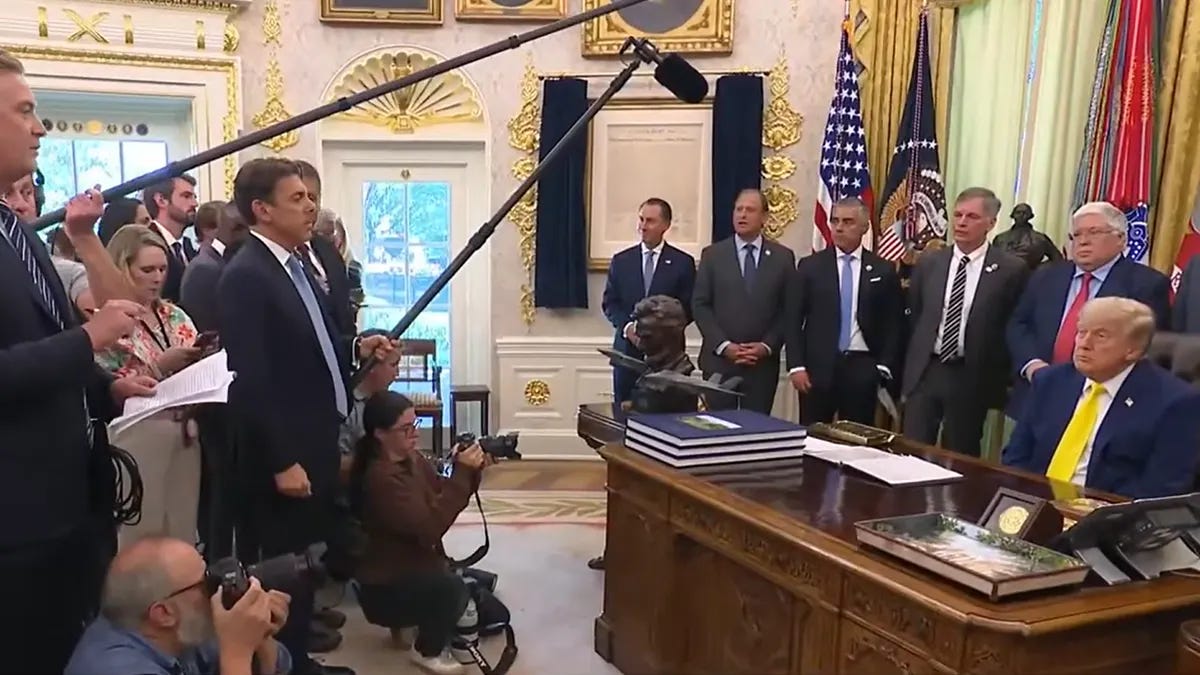
The move reverses a decade of federal policy that prioritized coal plant retirements. The administration has now combined direct investment with emergency regulatory orders to slow the coal exit across multiple states. For energy investors, the signal is clear: plants that were priced for closure may have extended operational life.
Watch for legal challenges from states and environmental groups. Federal authority to fund new coal construction sits on shakier legal ground than the emergency orders keeping existing plants online.
DOE Orders OUC’s 465-MW Coal Unit in Florida to Continue Running
The Department of Energy ordered Orlando Utilities Commission to keep its 465-megawatt Stanton Unit 1 coal plant operating rather than proceed with its planned retirement. The DOE invoked Section 202(c) of the Federal Power Act, an emergency reliability provision that gives the federal government authority to require a plant to stay online when its shutdown would threaten grid stability (Utility Dive).
OUC, the municipal utility serving Orlando, had scheduled the unit for retirement as part of its clean energy transition plan. The order overrides that schedule and is part of a broader pattern: the Trump administration has now issued multiple 202(c) orders across several states to prevent coal retirements ahead of peak summer demand.
Municipal utilities have fewer regulatory pathways to contest these orders than investor-owned utilities. OUC’s options are limited, and the forced operation adds cost that will eventually land on Orlando ratepayers.
Have fun this week,
Will
Sources
FERC Sets June Deadline to Rewrite Large-Load Grid Rules for AI-Era Power Demand | POWER Magazine
‘The absolute edge of precedent’: FERC prepares to take on data centers | E&E News
Gov. Stitt signs Oklahoma data center ratepayer protection bill into law | FOX23
SoftBank’s $85B France Bet Puts Power at Center of AI Race | Data Center Knowledge
DOE orders OUC’s 465-MW coal unit in Florida to continue running | Utility Dive
NRC approves NuScale’s small modular reactor plant design | Utility Dive
Groundbreaking celebrated for Colorado’s newest battery energy storage project | CBS Colorado