

Meta Plans to Beam Solar Energy Down from Space
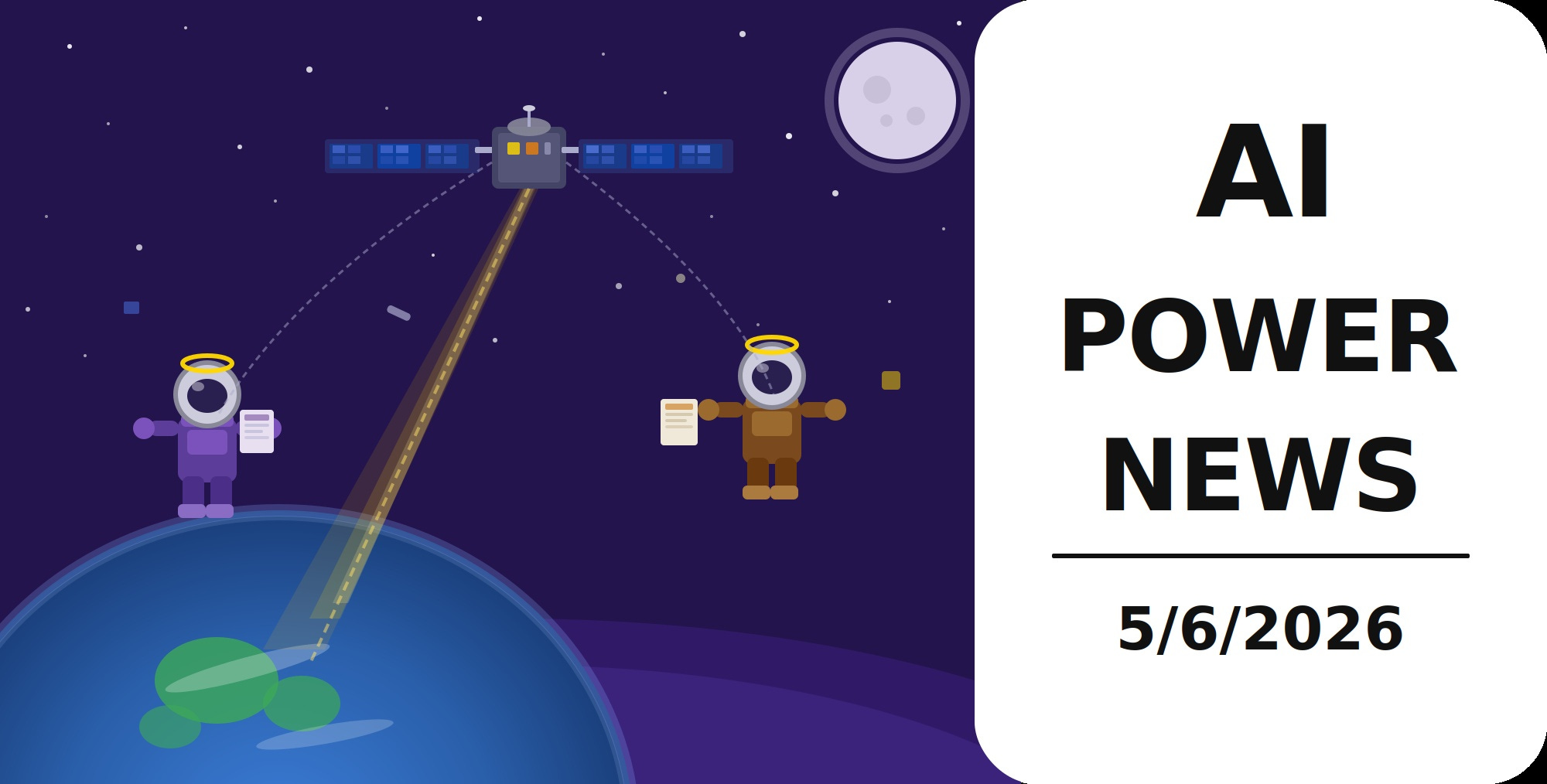
On April 27, Meta announced two new energy partnerships that are either a glimpse of AI’s power future or an expensive hedge, depending on how you read it. The first deal, with Overview Energy, reserves up to 1 gigawatt of space solar power for Meta’s data centers. Overview places satellites in geosynchronous orbit, roughly 22,000 miles above Earth, where they collect sunlight around the clock and beam it back as near-infrared light to ground-based solar installations. The first orbital demonstration is planned for 2028. Commercial delivery to the U.S. grid could start as early as 2030.
The second deal is with Noon Energy, reserving up to 1 GW and 100 gigawatt-hours of ultra-long-duration storage. Noon’s technology uses reversible solid oxide fuel cells to store carbon-based energy for more than 100 hours, which is far beyond what lithium-ion batteries can do today. A 25 MW pilot project is targeting 2028.
Both of these are pre-commercial. Meta is not plugging servers into satellites next year. But the company has now staked positions in space solar, long-duration storage, nuclear, and geothermal simultaneously. That is not a bet on one technology. That is a hedge against every possible failure in the grid buildout. Watch how other hyperscalers respond. The race for firm power is producing some genuinely strange infrastructure.
IEA: AI Data Center Electricity Surged 50% in 2025
The International Energy Agency published its “Key Questions on Energy and AI” report on April 24, showing that electricity use from AI-focused data centers grew 50% in 2025, against overall global electricity demand growth of 3%. Total data center electricity consumption rose 17% to around 415 terawatt-hours, roughly equivalent to the entire electricity consumption of France. Consumption is on track to double by 2030. The five largest tech companies spent more than $400 billion on capital expenditures in 2025 and are expected to increase that by 75% in 2026.
The IEA noted that planning and regulatory systems worldwide are being “stretched” by the wave of project applications. Supply chain bottlenecks across chips and energy equipment have tightened since the agency’s 2025 report. The numbers confirm what every utility earnings call this quarter has already said: the grid was not built for this, and the gap between AI load growth and infrastructure response is widening.
(IEA)
NextEra Q1 Earnings: 9.5 GW Gas Buildout, 21 GW Data Center Pipeline in Florida
NextEra Energy reported Q1 2026 earnings on April 23, with adjusted EPS up 10% year over year to $1.09. The headline was its data center pipeline. CEO John Ketchum said the company has 21 gigawatts of large-load interest in Florida alone, with 12 GW already in advanced discussions. NextEra is simultaneously developing 9.5 GW of new natural gas capacity in Texas and Pennsylvania to serve data center hubs, part of a Japan-backed initiative. The company added a record 4 GW of new renewables and storage to its contracted backlog in the quarter, bringing total backlog to 33 GW.
The 15-by-35 goal, securing 15 GW of new generation for large loads by 2035, now has an upside case of 30 GW. NextEra is positioning itself as the utility that builds power plants for AI. (Motley Fool)
Fermi America Implodes After CEO Exit and Missing Its First Tenant
Fermi America, the startup that raised investor excitement with plans to build 11 gigawatts of nuclear, solar, and gas for a Trump-branded AI campus near Amarillo, Texas, is in serious trouble. The company’s co-founder and CEO Toby Neugebauer and CFO Miles Everson departed abruptly in April. The stock ended the week 81% below its October 2025 IPO price. Construction has stalled. Fermi never secured a confirmed hyperscaler tenant. The Washington Post reported April 28 that shareholder lawsuits accuse the company of overhyping its prospects.
This is the first significant public implosion of a company built on the AI power buildout story. The failure reveals the gap between investor appetite for the sector and the operational reality of actually building new generation. (Washington Post)
MARA Holdings Acquires 505 MW Gas Plant in Ohio for $1.5 Billion
On April 30, MARA Holdings announced it will acquire Long Ridge Energy and Power from FTAI Infrastructure for approximately $1.5 billion. Long Ridge owns a 505-megawatt combined-cycle natural gas plant in Hannibal, Ohio, along with over 1,600 contiguous acres of land for a digital infrastructure campus. MARA is primarily known as a Bitcoin mining company and says the deal increases its digital infrastructure capacity by 65%. The transaction requires FERC approval and is expected to close in the second half of 2026.
Bitcoin miners and AI data centers increasingly compete for the same power infrastructure. MARA is turning a generation asset into a long-term platform. (CoinDesk)
Massachusetts Signs Contracts Saving $1.4 Billion on Offshore Wind
Massachusetts announced on May 1 that it has signed contracts with a developer consortium for up to 2,400 megawatts of new offshore wind capacity, saving the state an estimated $1.4 billion compared to prior offshore wind procurement costs. The deal reflects falling offshore wind construction and financing costs. Offshore wind capacity is growing even as some federal lease activity has been frozen under the current administration’s energy policy. Massachusetts is the first state to publicly quantify the savings from the latest round of procurement.
(Electrek)
California Battery Storage Hits 12,000 MW During Peak Hours
California’s grid-scale battery system discharged a record 12,000 megawatts during peak evening hours last week, a level the state says is equivalent to the output of 12 large nuclear power plants and covered more than 40% of statewide demand at that moment. The milestone reflects explosive growth in battery storage deployment, driven by the need to capture daytime solar and release it after sunset when demand peaks. California’s installed battery storage has grown by nearly 2,000% since 2019.
The context for the rest of the country: California is proving batteries can carry meaningful grid load at scale. Whether that translates to regions with less solar and more AI compute concentrated in single campuses remains an open question. (Inside Climate News)
Have fun this week,
Will
Sources
Meta Seeks to Power Data Centers With Energy Beamed From Space | Bloomberg
Meta inks deal for solar power at night, beamed from space | TechCrunch
NextEra Energy adds record 4 GW of renewables and storage backlog in Q1 | PV Magazine
Fermi’s nuclear-powered AI data center plan looks shaky after stock crash | Washington Post
CEO and CFO suddenly depart AI nuclear power upstart Fermi | TechCrunch
MARA to buy Long Ridge Energy in $1.5 billion AI data center push | CoinDesk
$1.4B saved: Massachusetts locks in cheaper offshore wind power | Electrek
California’s Battery Array Is as Powerful as 12 Nuclear Power Plants | Inside Climate News