

Anthropic Buys xAI’s Entire Colossus 1 Data Center Capacity
Anthropic announced Wednesday it is buying all the compute capacity at xAI’s Colossus 1 data center in Tennessee, roughly 300 megawatts that allowed Anthropic to immediately raise its usage limits for Claude. The deal is worth billions of dollars and immediately monetizes one of xAI’s most impressive technical accomplishments. Elon Musk said on X that xAI had already moved training to a newer data center, Colossus 2, and simply did not need both facilities. xAI is now expanding its Memphis footprint to nearly 2 gigawatts with a third building purchase and a planned natural gas power plant.
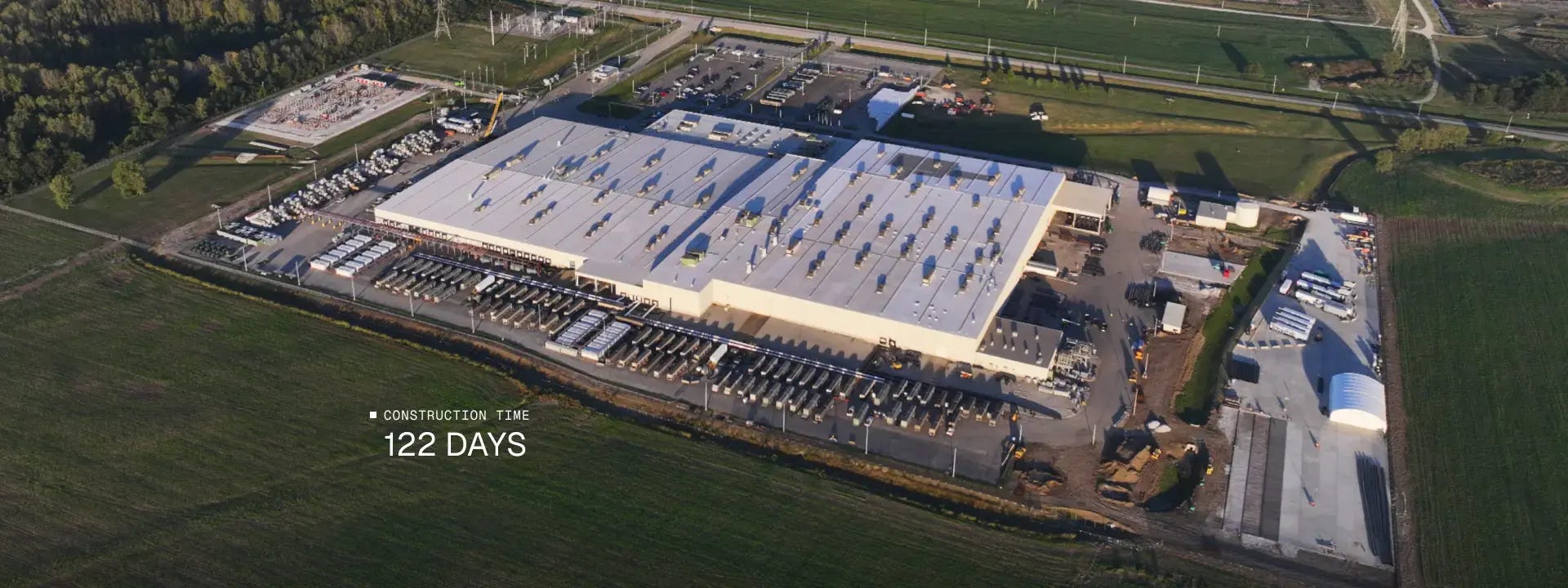
(xAI)
The arrangement raises questions about xAI’s strategy. Most AI companies prioritize using compute for their own model training rather than renting it out. Google, Meta, and Microsoft are all building more data centers even as they train models, because they view computing power as strategic for building tomorrow’s products. By focusing on data centers rather than models, xAI is positioning itself more like a neocloud business: buying GPUs from Nvidia and renting them to model developers. That is a harder business, squeezed by chip suppliers and shifting demand cycles. CoreWeave, which oversees comparable computing power, is valued at less than a third of xAI’s $230 billion valuation from its January funding round.
The deal also suggests xAI’s Grok chatbot is not burning through the compute resources the company built. Grok usage has plummeted since image generation controversies earlier this year. Becoming a supplier to Anthropic is lucrative, but it sends an unusual message about where Musk’s priorities actually lie.
NextEra Energy to Acquire Dominion Energy for $67 Billion
NextEra Energy announced it will acquire Dominion Energy in an all-stock deal valued at approximately $67 billion, creating the world’s largest regulated electric utility. The combined company will serve roughly 10 million customers across Florida, Virginia, North Carolina, and South Carolina. Dominion shareholders get 0.8138 NextEra shares for each share they hold, and Dominion customers receive $2.25 billion in bill credits over the two years after closing.
Virginia is the largest data center market in the world, and Dominion is the primary utility serving it. NextEra already has 21 gigawatts of data center load requests in its Florida pipeline alone. Combining the two utilities puts a single company in control of the electricity supply for the most data center dense region in the country, plus one of the fastest growing.
The deal still requires federal and state regulatory approval and is not expected to close until mid-to-late 2027. Watch whether state regulators in Virginia push back on the return on equity NextEra can charge, since higher utility profits ultimately flow through to data center power costs and residential bills.
(CBS News)
FERC Chair Signals June Rulemaking on Data Center Grid Access
Federal regulators will take “widespread action” next month to accelerate how data centers and other large loads connect to the electric grid, FERC Chair Laura Swett announced Tuesday at a United States Energy Association event in Washington. The move comes as interconnection delays have become what Swett called “the most important and pressing problem in contemporary American public policy.” FERC staff have reviewed more than 3,500 pages of comments on how to handle large load interconnections, examining recent actions in PJM and Southwest Power Pool.
The stakes are enormous. Data centers now account for 97% of projected load growth in the PJM region, which serves 67 million people across 13 states. Wholesale power prices in PJM jumped 76% in the first quarter of 2026 compared to the same period in 2025, driven primarily by data center demand. That translates to real money for residential customers. If current trends hold, PJM households could face an additional $70 per month in electricity costs by 2033, according to the Natural Resources Defense Council.
FERC has already ordered PJM to create new transmission service options for colocated loads, essentially data centers paired with their own generation. Now the agency is weighing whether to extend federal oversight to all large load interconnections over 20 megawatts, a jurisdiction historically left to states. The Department of Energy set an April 30 deadline for FERC to act, but June appears to be when the rubber meets the road. Watch whether FERC requires full upfront payment for network upgrades or allows costs to be credited back over time.
DOE Awards $94 Million to Eight Companies for SMR Deployment
The Department of Energy handed out $94 million to eight companies on Wednesday to speed deployment of small modular reactors, the light water designs that are the closest to commercial reality. A small modular reactor, or SMR, is a nuclear plant that generates 300 megawatts or less and can be built in a factory rather than entirely onsite. The money targets three bottlenecks: licensing, supply chain, and site preparation. Constellation SMR Development received $17.3 million to pursue an Early Site Permit in New York. Nebraska Public Power District got $27.9 million for similar work in Nebraska. On the manufacturing side, Framatome secured $8.8 million to expand fuel pellet production in Washington, adding capacity for 200 metric tons of uranium annually.
This is the second round of federal SMR funding. In December, DOE awarded $800 million to Tennessee Valley Authority and Holtec for first mover projects. Those two deals alone represent more than 1 gigawatt of planned nuclear capacity. The $94 million announced this week is smaller but strategically important because it funds the supply chain that will make follow on orders possible. Secretary Chris Wright framed the awards as critical to powering data centers and manufacturing, saying advanced light water SMRs will provide “reliable, round the clock power” for AI growth.
The subtext is speed. Light water SMRs use proven reactor technology, not exotic designs still under development. That matters when hyperscalers are signing 20 year power purchase agreements for nuclear electricity they need online by 2030.
PJM Wholesale Power Costs Jump 76% on Data Center Demand
Wholesale electricity prices on the PJM grid averaged $136.53 per megawatt hour in the first quarter of 2026, up from $77.78 in the same period last year, according to Monitoring Analytics, PJM’s independent market monitor. That is a 76% increase in three months, driven almost entirely by data center load. The report confirms what grid operators have been warning about: data centers are not just another customer, they are reshaping the economics of the entire Mid Atlantic and Midwest power market. Data center forecasts now account for $21.3 billion, or 45%, of capacity costs across PJM’s last three auctions.
Capacity prices tell the story even more starkly. PJM’s capacity auction cleared at $329.17 per megawatt day for the 2026 to 2027 delivery year. Two years ago, the same auction cleared at $28.92. That is more than a tenfold increase. Utility supply rates across the region have already risen between 5% and 44%, and that was before this year’s auction results hit customer bills.
The grid itself is struggling to keep up. PJM’s most recent capacity auction fell 6,500 megawatts short of its reliability target for the first time. Meanwhile, data centers represent 97% of new load growth in the region. This is not a temporary spike. It is a structural shift in electricity demand happening faster than generation can be added.
Battery Storage on Track for Record 24 GW of Additions in 2026
Developers plan to add 24 gigawatts of utility scale battery storage to the U.S. grid in 2026, a 60% jump from the 15 gigawatts added last year, according to the Energy Information Administration. By the end of the first quarter of 2027, total U.S. battery storage capacity will surge from 44.6 gigawatts to over 67 gigawatts. Three states dominate the buildout: Texas, California, and Arizona. Major projects slated for this year include the 621 megawatt Lunis Creek battery in Jackson, Texas, and the 500 megawatt Bellefield 2 Solar and Energy Storage Farm in Kern County, California.
Battery storage has become essential grid infrastructure, not an optional add on. Utilities need batteries to manage the rapid expansion of solar generation, which floods the grid with cheap power at midday but disappears in the early evening when demand peaks. Data centers are also driving storage deployment. On site batteries allow data centers to buffer against grid instability and store renewable energy during surplus periods. The U.S. data center market is expected to grow to 60 gigawatts in 2026, and battery storage is integral to energy management for virtually all new large scale facilities.
Costs are falling fast. Levelized cost of storage has reached approximately $140 per megawatt hour in California solar plus storage configurations, according to Fluence. That makes storage economically competitive for an expanding set of grid services, from energy arbitrage to frequency regulation.
Lake Tahoe Faces Power Loss as Utility Prioritizes Data Centers
NV Energy told Liberty Utilities it will stop providing power to the Lake Tahoe region after May 2027, citing a need to redirect capacity to data centers in Northern Nevada. Nearly 49,000 residents in the Lake Tahoe area now face the prospect of finding a new power source within a year. The reason is straightforward: Google, Apple, and Microsoft have built or are planning data center facilities around the Tahoe Reno Industrial Center east of Reno. Those facilities are pulling massive amounts of electricity. Data centers consumed 22% of Nevada’s electricity in 2024, and that share could hit 35% by 2030.

The scale of new demand is staggering. Twelve data center projects in Northern Nevada alone could drive 5,900 megawatts of new demand by 2033, according to the Desert Research Institute’s analysis of NV Energy’s 2024 Integrated Resource Plan. About 75% of major project load growth in NV Energy’s own filing is attributed to data centers. Liberty Utilities asked California regulators to authorize an expedited request for proposals for replacement energy beginning June 2027. Short term power is likely available from elsewhere in the West, but Lake Tahoe’s small customer base gives it little leverage when competing against data centers and mining companies for long term contracts.
The situation underscores a broader dynamic. When utilities face capacity constraints, data centers with guaranteed revenue streams and 20 year contracts win. Residential customers with variable usage and month to month billing lose.
(Fortune)
NERC Issues Highest Level Alert on Data Center Grid Risks
The North American Electric Reliability Corporation issued a Level 3 alert, its highest warning level, about threats to the power system from large data centers. The alert was developed after reports of data centers abruptly going offline in Virginia and Texas, raising concerns about blackouts. NERC warned that “computational loads, such as data centers, could increase exponentially in the next four years” and that “significant risks” to the bulk power system “need to be addressed through immediate action.” The alert recommends seven essential actions for transmission owners, grid operators, and utilities to ease risks from large loads.
AI workloads can swing power demand dramatically in milliseconds, far faster than traditional industrial loads. A paper from Nvidia, Microsoft, and OpenAI scientists warned last year that AI power swings can “cause physical damage” to grid infrastructure. NERC’s alert calls for transmission planners to develop detailed modeling data from computational loads and study grid stability margins at least annually in areas with large AI infrastructure. Transmission owners should install fault recording devices to assess data center performance during grid disturbances.
The actions are not mandatory yet, but NERC is clearly laying groundwork for mandatory reliability standards for data centers, which would require FERC approval. Part of the challenge is scale. Multiple gigawatt complexes are now being planned across the country. A gigawatt is enough to power roughly 750,000 homes.
(E&E News)
Have fun this week,
Will